Take Inventory First
- Check the fridge for items to use up this weekPlan meals around what's already nearing its use-by date.
- Scan the freezer for proteins and ready components
- Review pantry staples like rice, pasta, and canned goods
- Note fresh produce that needs eating soon
- List anything running low that you'll need to restock
Check Your Week's Calendar
- Mark nights you'll be out or eating elsewhere
- Flag busy evenings that need quick or leftover meals
- Find one slot for a longer recipe or batch cook
- Note any guests or special occasions to cook for
- Decide which night you'll do the grocery shop
Plan Breakfasts and Lunches
- Choose two or three repeatable breakfasts for the week
- Plan grab-and-go options for rushed mornings
- Decide on packed lunches or planned leftovers
- Pick lunches that reuse dinner ingredients
- Add any work or school lunch requirements
Plan Dinners
- Assign a dinner to each night of the week
- Repeat a theme like taco night or pasta night to simplify
- Choose recipes that share key ingredients
- Plan a deliberate leftovers or clean-out-the-fridge night
- Balance the week with variety in proteins and vegetables
- Keep one easy backup meal for unexpected changes
Plan Snacks and Drinks
- List everyday snacks for the household
- Add lunchbox or after-school snacks for kids
- Plan a few healthier options like fruit and yogurt
- Note drinks, coffee, and beverages to restock
Build the Shopping List
- Write every ingredient from your planned meals
- Cross off anything you confirmed you already have
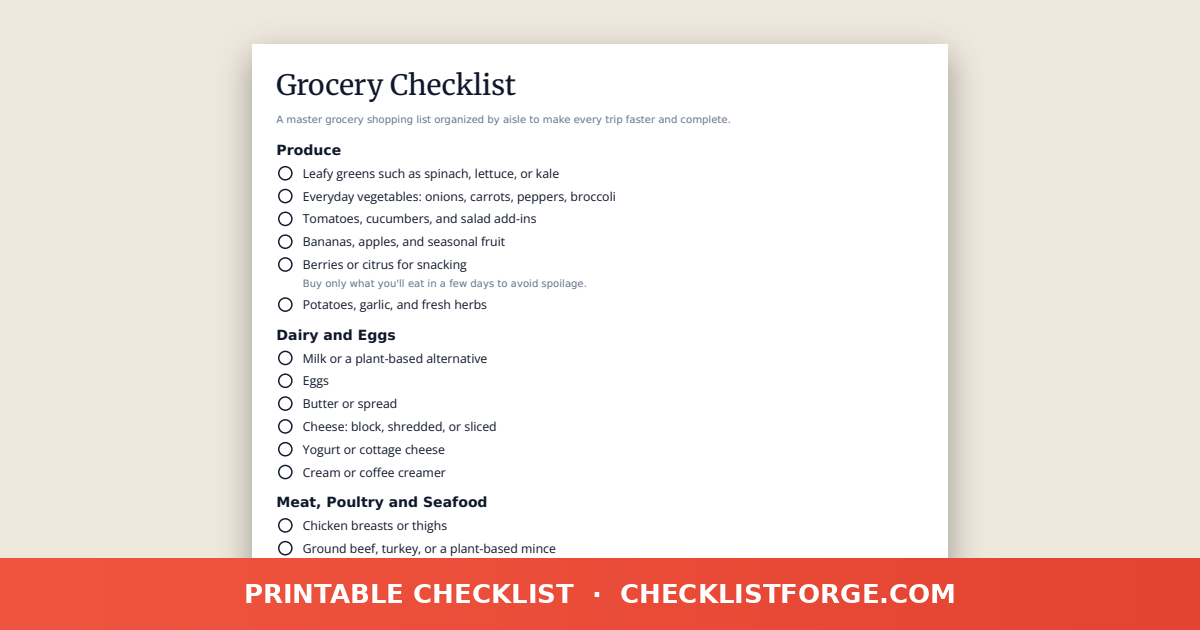
- Group the list by aisle or store section
- Add household and staple items that are low
- Estimate the total against your weekly budgetSwap in sale items or cheaper proteins to hit your target.
- Post the meal plan on the fridge for the family to see
0 / 31 done