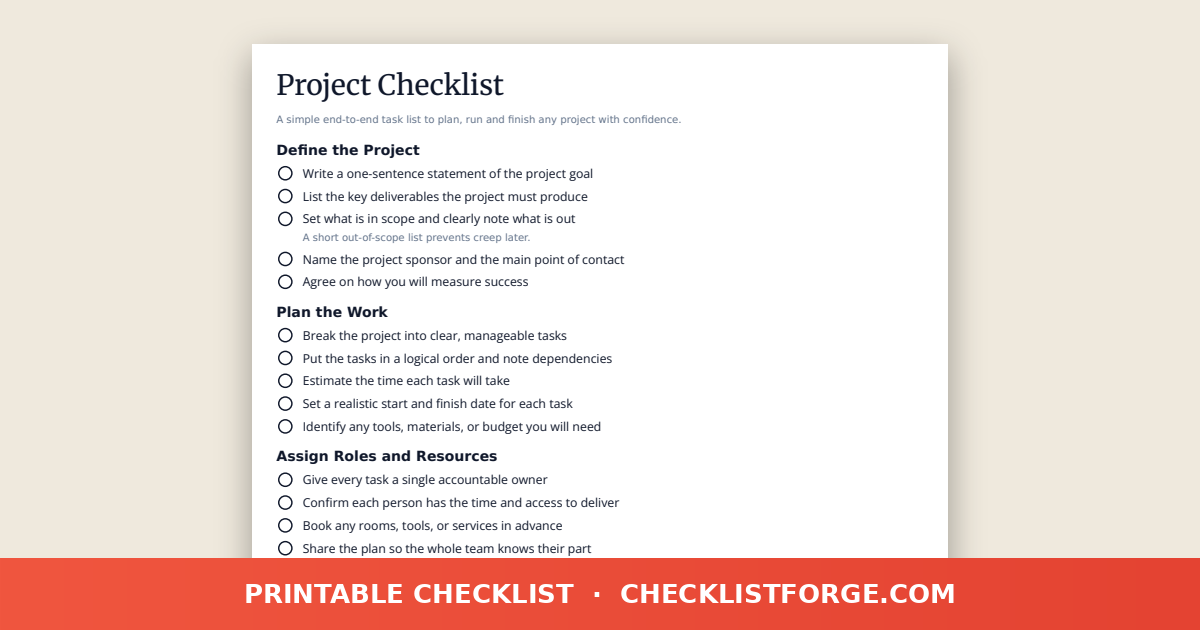
Initiation
- Define the business case and the problem the project solves
- Identify the sponsor and confirm executive support
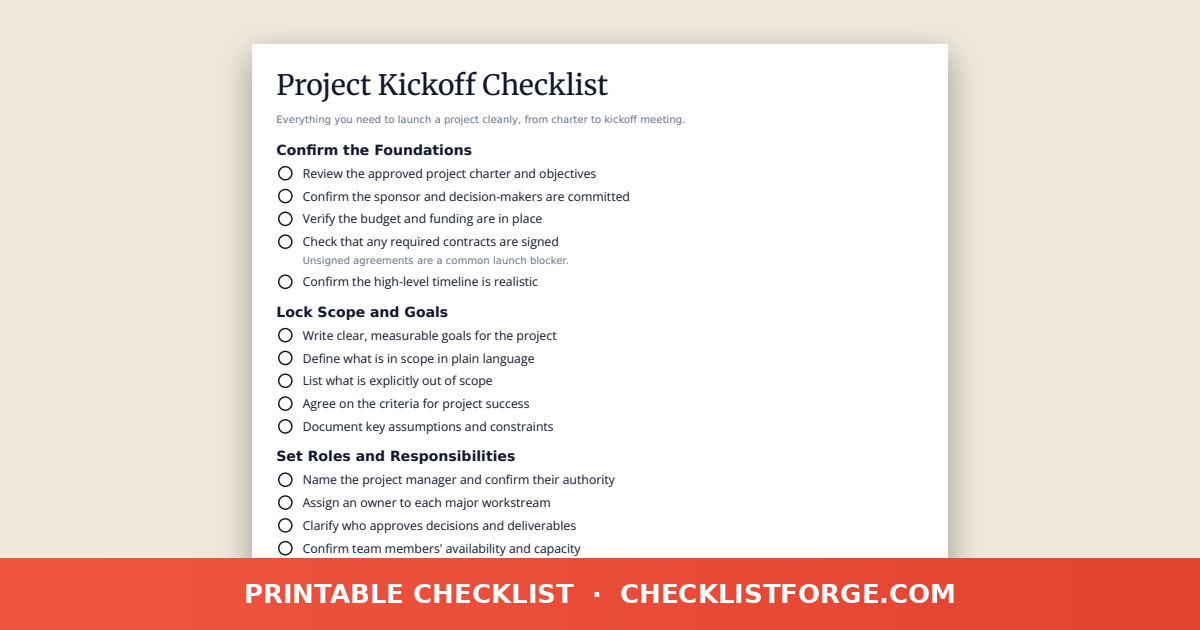
- Draft a project charter with goals and high-level scope
- Map the key stakeholders and their interests
- Get formal approval to proceed before any planning startsWritten authorization protects the project later.
Planning
- Break the scope into a work breakdown structure
- Build a schedule with milestones and dependencies
- Estimate the budget and confirm funding
- Define roles with a responsibility assignment matrix
- Create a risk register with mitigation plans
- Agree a communication plan and reporting cadence
Execution
- Kick off the project with the full team
- Assign tasks and confirm everyone understands their work
- Produce the deliverables to the agreed quality standard
- Coordinate vendors, contractors, and dependencies
- Keep stakeholders updated against the communication planConsistent updates build trust and prevent surprises.
Monitoring and Control
- Track progress against schedule, scope, and budget
- Compare planned versus actual performance regularly
- Review and update the risk register at each checkpoint
- Run change requests through a formal approval processDocument every scope change and its impact.
- Adjust the plan and resources when variances appear
- Verify quality before accepting any deliverable
Stakeholder and Risk Management
- Re-check stakeholder needs as the project evolves
- Escalate critical issues to the sponsor promptly
- Hold regular risk reviews with the core team
- Keep a decision log so choices are traceable
- Manage expectations on timing and trade-offs
Closing
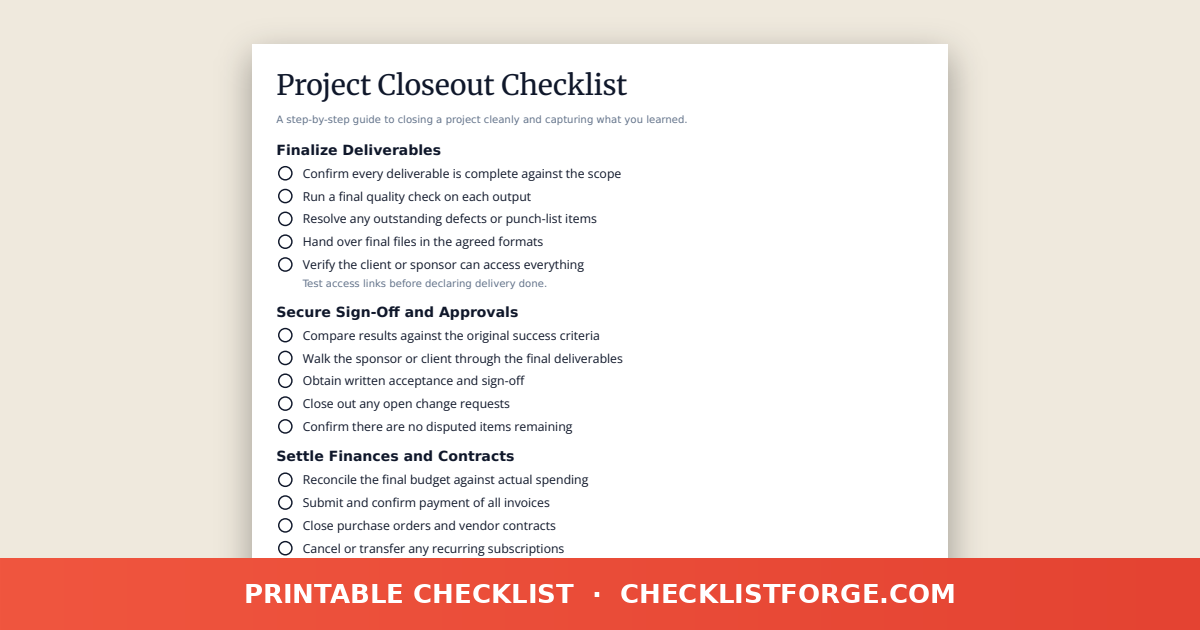
- Confirm all deliverables are complete and accepted
- Obtain formal sign-off from the sponsor or client
- Release resources, contracts, and licenses
- Archive documents, data, and final reports
- Run a lessons-learned review with the teamCapture improvements while memories are fresh.
- Hand over to operations and close the project formally
0 / 33 done