Preventive Maintenance Schedule
- Set PM intervals from each manufacturer's schedule
- Adjust intervals for usage, mileage and conditions
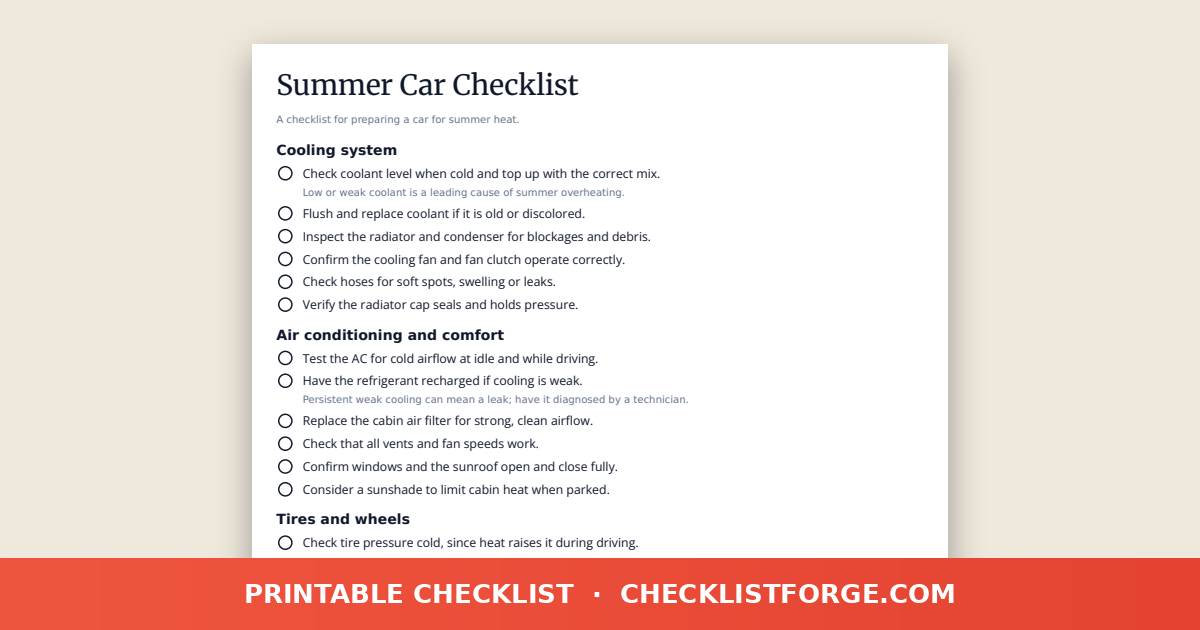
- Schedule oil and filter changes by mileage or time
- Plan tire rotations, alignments and replacements
- Schedule fluid checks, flushes and belt and hose service
- Track upcoming PM due dates for each vehicle
Routine Vehicle Inspections
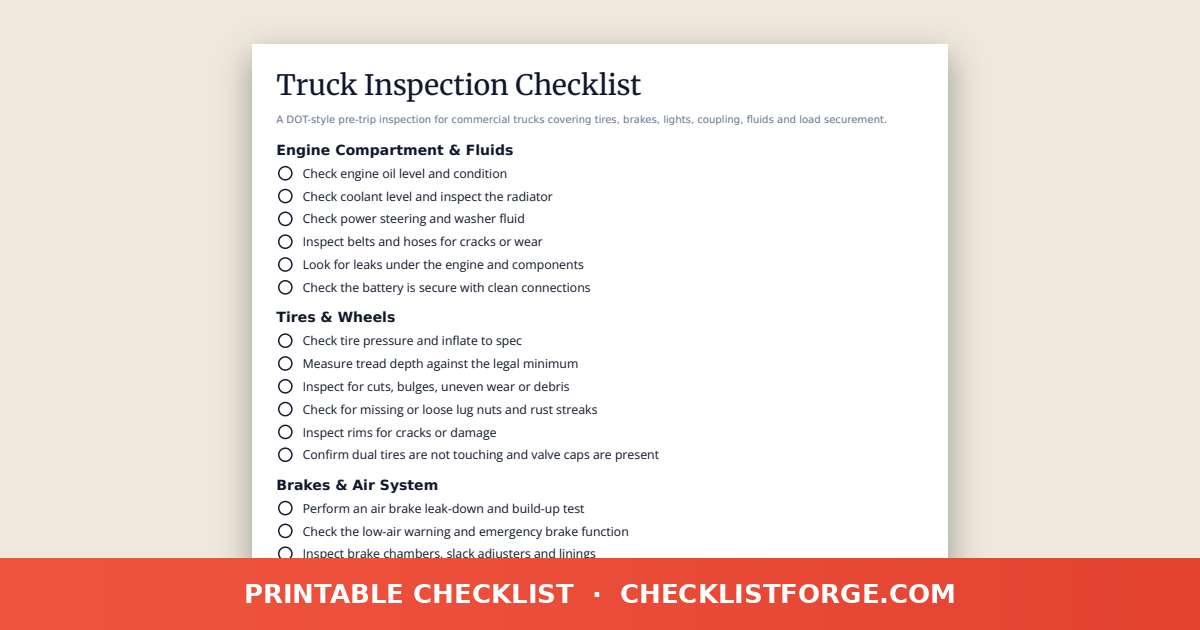
- Require driver pre-trip and post-trip inspections
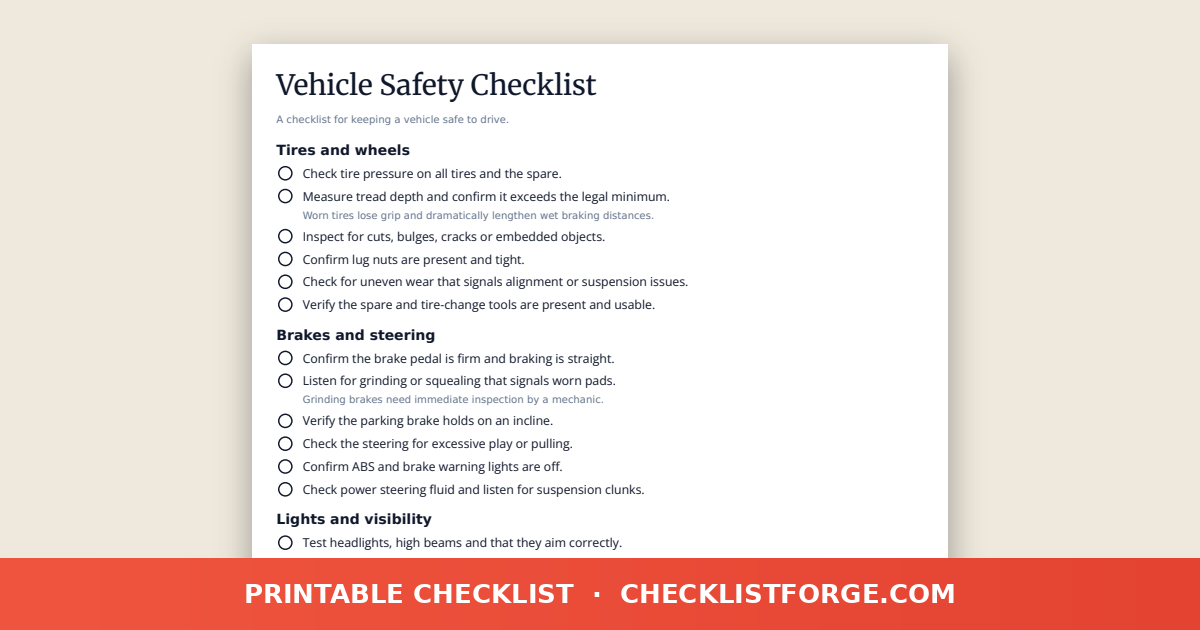
- Inspect tires, brakes, lights and steering regularly
- Check fluid levels and look for leaks
- Inspect wipers, mirrors and safety equipment
- Review and act on driver vehicle inspection reports
- Log and prioritize defects for repair
Repairs & Work Orders
- Open a work order for every repairCapture parts, labor and the technician on record
- Triage defects by safety and urgency
- Use qualified technicians or approved vendors
- Track repair costs per vehicle to spot problem units
- Verify completed repairs before returning to service
- Manage warranty and recall work
Records & Documentation
- Keep a complete maintenance history per vehicle
- Use fleet software or a central log for records
- Record mileage, service dates and costs
- Store inspection reports and work orders
- Track parts inventory and usage
- Document fuel use and monitor efficiency trends
Compliance & Safety
- Track registration, insurance and inspection renewals
- Monitor emissions and required certifications
- Keep driver qualification and licensing records current
- Follow the regulations that apply to your fleet
- Maintain records to support audits and inspections
- Remove unsafe vehicles from service until repaired
Fleet Management & Costs
- Set a maintenance budget and track spend per vehicle
- Review uptime, downtime and breakdown trends
- Plan vehicle replacement based on age and cost
- Standardize procedures and checklists across the fleet
- Train drivers on inspections and reporting
- Review supplier and vendor performance periodically
0 / 36 done