Vehicle Safety Checklist

A checklist for keeping a vehicle safe to drive.

Published July 15, 2026

Tires and wheels

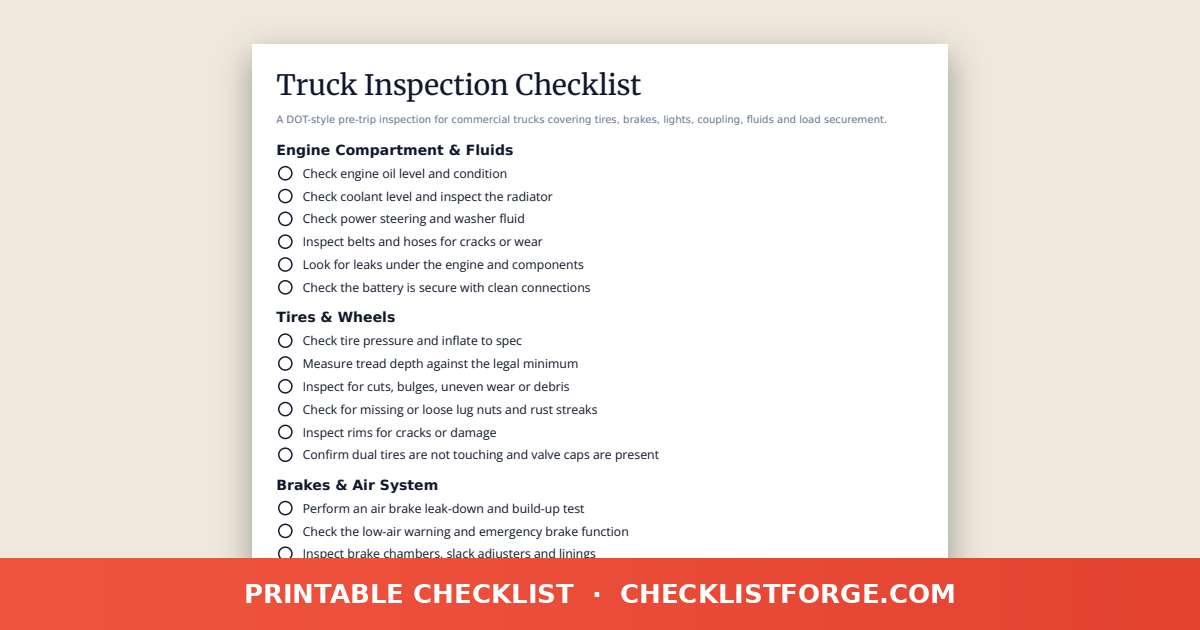
  • Check tire pressure on all tires and the spare.
  • Measure tread depth and confirm it exceeds the legal minimum.
    Worn tires lose grip and dramatically lengthen wet braking distances.
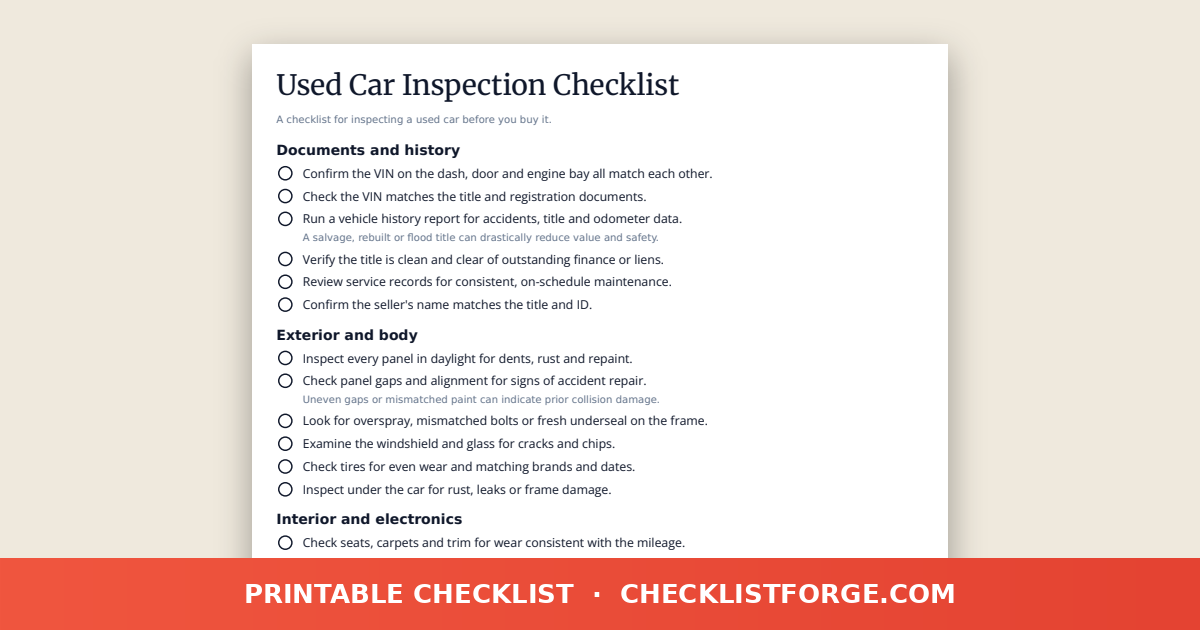
  • Inspect for cuts, bulges, cracks or embedded objects.
  • Confirm lug nuts are present and tight.
  • Check for uneven wear that signals alignment or suspension issues.
  • Verify the spare and tire-change tools are present and usable.

Brakes and steering

  • Confirm the brake pedal is firm and braking is straight.
  • Listen for grinding or squealing that signals worn pads.
    Grinding brakes need immediate inspection by a mechanic.
  • Verify the parking brake holds on an incline.
  • Check the steering for excessive play or pulling.
  • Confirm ABS and brake warning lights are off.
  • Check power steering fluid and listen for suspension clunks.

Lights and visibility

  • Test headlights, high beams and that they aim correctly.
  • Check brake lights, turn signals and hazard lights.
  • Verify reverse, fog and license plate lights.
  • Confirm wipers clear the glass and washers spray.
  • Clean the windshield, mirrors and lights.
  • Test the defroster and demister for clear visibility.

Restraints and occupant safety

  • Confirm all seatbelts latch, retract and are undamaged.
  • Check child seats are correctly installed and within their limits.
    Follow the seat and vehicle manuals for correct child-seat fitting.
  • Verify airbag warning lights clear at start-up.
  • Confirm head restraints are present and adjusted.
  • Check that doors and child locks operate correctly.
  • Ensure no loose objects can become projectiles in a crash.

Recalls and systems

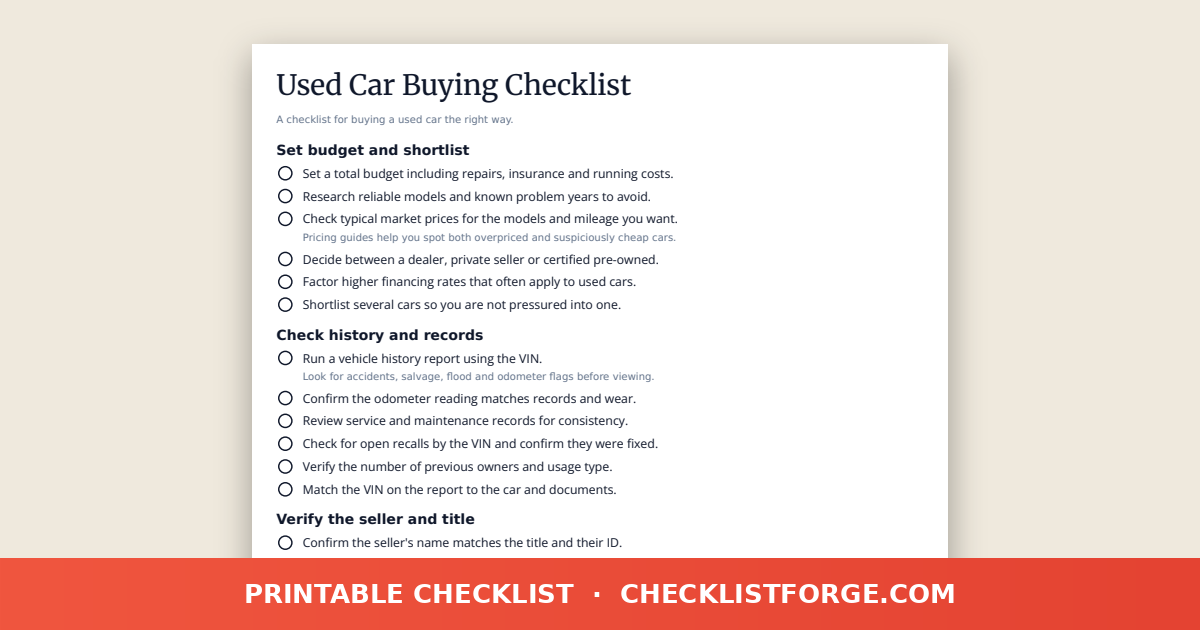
  • Search for open recalls using your VIN and have them fixed.
    Recall repairs are typically free at a manufacturer's dealer.
  • Address any dashboard warning lights promptly.
  • Verify driver-assistance systems function as intended.
  • Check that the horn sounds clearly.
  • Confirm the engine and transmission show no warning faults.
  • Keep the maintenance and recall history up to date.

Emergency equipment

  • Carry a warning triangle and reflective vest.
  • Pack a first-aid kit and check its contents.
  • Keep a flashlight with working batteries.
  • Carry jumper cables or a portable jump starter.
  • Stock water and seasonal emergency supplies.
  • Confirm a fire extinguisher where required and keep it accessible.

0 / 36 done
A vehicle safety checklist is a structured review of the parts of a vehicle that keep it safe to drive, covering tires, brakes, lights, seatbelts, the emergency kit and outstanding recalls. Each item is checked against a pass or fail standard so safety defects are caught before they cause a crash.

Safety faults rarely announce themselves. A bald tire, a weak brake, a hidden recall or an unbuckled child seat can sit unnoticed until the one moment it matters, when there is no time to fix it.

Use this checklist whether you maintain a single family car or a small fleet, running it regularly and after any incident or repair. It focuses on the vehicle's safety condition; safe driving behavior is a separate concern covered by a driver safety checklist.

Print the checklist to work through item by item, or download the PDF to complete on your phone and log defects. These checks supplement, and do not replace, your owner's manual, official inspections and a qualified mechanic for any brake, tire, steering or safety-system repair.

FAQ

What is a vehicle safety checklist?

It's a structured review of the safety-critical parts of a vehicle — tires, brakes, lights, seatbelts, emergency kit and recalls — checked against pass or fail standards so owners catch defects before they cause a crash.

How often should I do a vehicle safety check?

Do a quick safety walkaround monthly and before long trips, a fuller check seasonally, and an immediate check after any incident, repair or warning light. Address a safety defect before driving the vehicle again.

How do I check for vehicle recalls?

Use your VIN to search the manufacturer's recall lookup or your national safety authority's database. Recall repairs are usually free at a dealer, so confirm any open recall is completed promptly for safety.

What safety items should every vehicle carry?

Keep a spare tire and tools, a warning triangle, a first-aid kit, a flashlight, jumper cables and water aboard. Confirm seatbelts and any child seats are present, undamaged and correctly fitted.

Is this available as a printable PDF?

Yes. Print the vehicle safety checklist to work through item by item, or download the PDF to complete on your phone and log any defects.