Documents and history
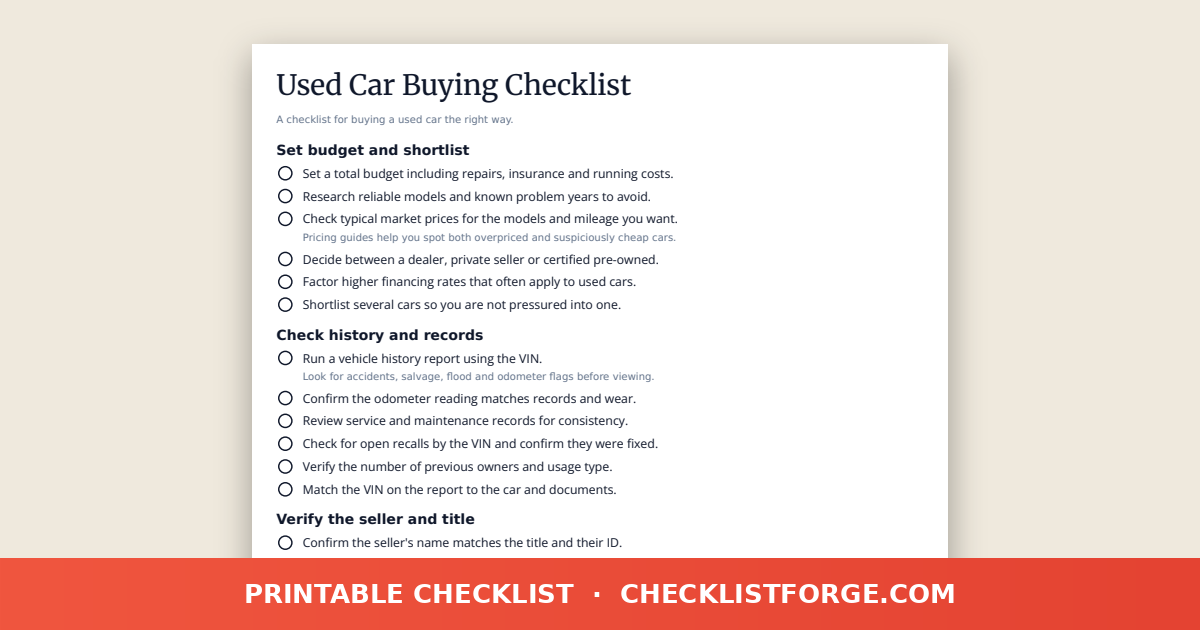
- Confirm the VIN on the dash, door and engine bay all match each other.
- Check the VIN matches the title and registration documents.
- Run a vehicle history report for accidents, title and odometer data.A salvage, rebuilt or flood title can drastically reduce value and safety.
- Verify the title is clean and clear of outstanding finance or liens.
- Review service records for consistent, on-schedule maintenance.
- Confirm the seller's name matches the title and ID.
Exterior and body
- Inspect every panel in daylight for dents, rust and repaint.
- Check panel gaps and alignment for signs of accident repair.Uneven gaps or mismatched paint can indicate prior collision damage.
- Look for overspray, mismatched bolts or fresh underseal on the frame.
- Examine the windshield and glass for cracks and chips.
- Check tires for even wear and matching brands and dates.
- Inspect under the car for rust, leaks or frame damage.
Interior and electronics
- Check seats, carpets and trim for wear consistent with the mileage.
- Smell for damp, mold or strong air fresheners masking flood damage.
- Test all windows, locks, mirrors and the sunroof.
- Verify the air conditioning, heater and infotainment work.
- Confirm all warning lights illuminate then clear at start-up.
- Check the odometer reading against pedal, seat and tire wear.
Engine and under the hood
- Inspect the cold engine for leaks, corrosion and frayed belts.
- Check oil on the dipstick for level, color and a milky film.A milky film can signal a head gasket or coolant problem — investigate further.
- Check coolant, brake and transmission fluids for level and condition.
- Look for fresh sealant or repairs hiding a leak.
- Watch the exhaust at start-up for blue, white or black smoke.
- Listen for knocking, ticking or rough idle once running.
Test drive
- Start cold and note any hesitation, smoke or warning lights.
- Test acceleration, smooth shifting and the clutch or transmission.
- Brake firmly to check for pulling, vibration or noise.
- Drive at highway speed to feel for vibration or wandering.
- Test steering for play, pulling and a centered wheel.
- Listen for clunks over bumps and on turns at low speed.
Final checks before buying
- Arrange a professional pre-purchase inspection by an independent mechanic.An independent inspection is the single best protection against a costly used car.
- Get any agreed repairs or terms in writing before paying.
- Confirm all keys, the owner's manual and accessories are included.
- Verify the registration is current and transferable.
- Use your findings to negotiate the price down.
- Complete a written bill of sale and proper title transfer.
0 / 36 done