Set budget and shortlist
- Set a total budget including repairs, insurance and running costs.
- Research reliable models and known problem years to avoid.
- Check typical market prices for the models and mileage you want.Pricing guides help you spot both overpriced and suspiciously cheap cars.
- Decide between a dealer, private seller or certified pre-owned.
- Factor higher financing rates that often apply to used cars.
- Shortlist several cars so you are not pressured into one.
Check history and records
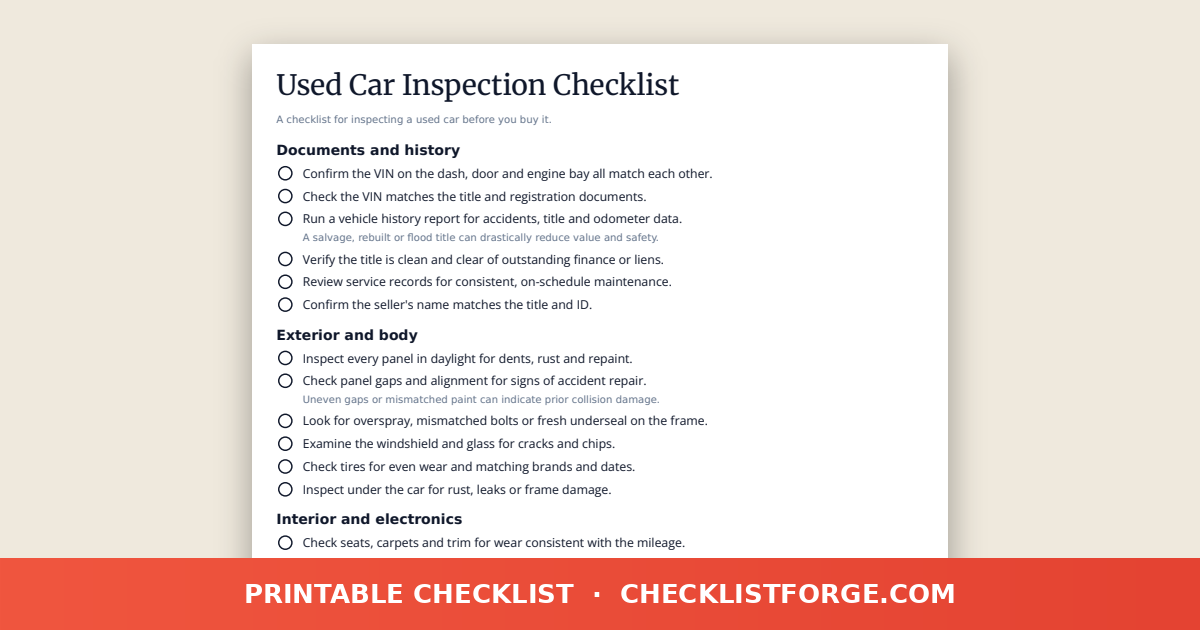
- Run a vehicle history report using the VIN.Look for accidents, salvage, flood and odometer flags before viewing.
- Confirm the odometer reading matches records and wear.
- Review service and maintenance records for consistency.
- Check for open recalls by the VIN and confirm they were fixed.
- Verify the number of previous owners and usage type.
- Match the VIN on the report to the car and documents.
Verify the seller and title
- Confirm the seller's name matches the title and their ID.
- Verify the title is clean, not salvage, rebuilt or branded.A branded title sharply lowers value, insurability and safety.
- Check there is no outstanding loan or lien on the car.
- Be cautious of curbstoners posing as private sellers.
- Meet in a safe, public place for private sales.
- Confirm the registration is current and transferable.
Inspect and test drive
- Inspect the body, interior and engine bay in daylight.
- Test drive on varied roads and at highway speed.
- Watch for warning lights, smoke, noises and pulling.
- Note the mileage relative to the car's age and condition.
- Arrange a professional pre-purchase inspection by a mechanic.An independent inspection is the best protection against a bad used car.
- Use any defects found to inform your offer.
Negotiate the price
- Base your offer on market value and the car's condition.
- Use inspection findings and needed repairs as leverage.
- Compare similar listings to justify your price.
- Negotiate the total price, not a monthly payment.
- Stay calm and be willing to walk away.
- Get the agreed price and any terms in writing.
Complete the purchase
- Verify the VIN, mileage and details on the bill of sale.
- Complete the title transfer correctly and on time.
- Pay safely and obtain a signed receipt or bill of sale.
- Update insurance to cover the car before driving it.
- Register the vehicle in your name and get plates.
- Collect all keys, the manual and service records.
0 / 36 done