Permit and Authorization
- Confirm the confined space is evaluated and classified before entry.
- Verify a valid entry permit is completed, signed and posted.
- Check the permit lists hazards, controls and authorized entrants.The permit is valid only for the duration and conditions stated.
- Confirm the entry supervisor has authorized the entry.
- Verify the permit is canceled and conditions are reassessed if anything changes.
- Confirm entry, work and exit times are recorded.
Isolation and Lockout
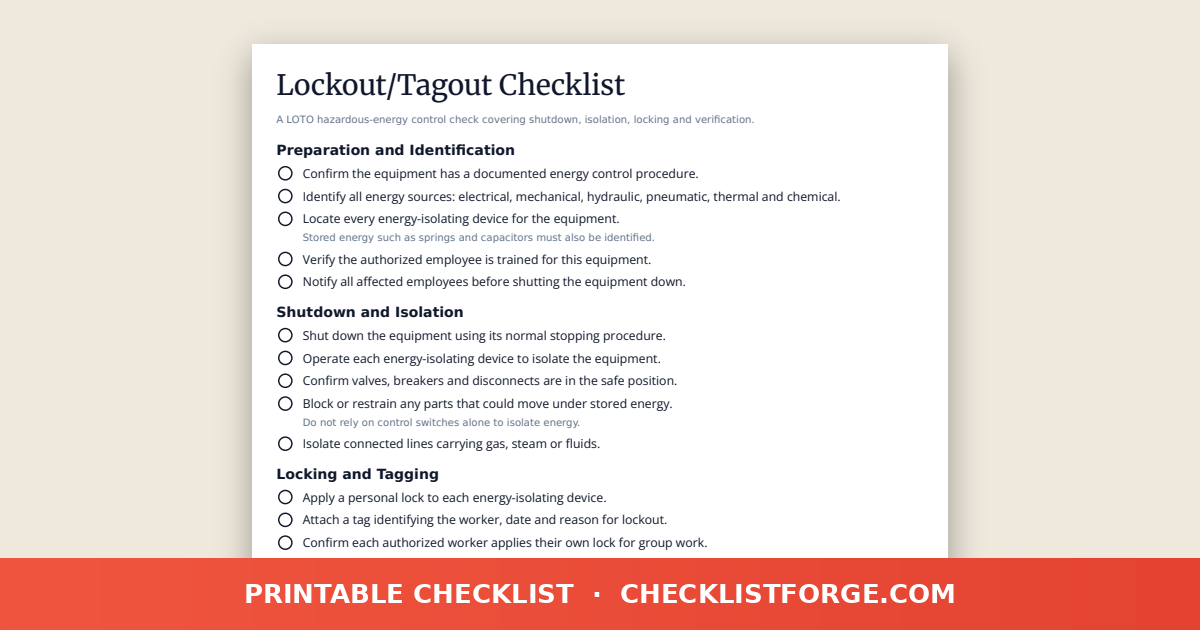
- Confirm all hazardous energy is identified and controlled by lockout/tagout.
- Verify lines carrying liquids, gases or steam are blanked or disconnected.
- Check that mechanical equipment inside the space is de-energized and locked.
- Confirm engulfment hazards from liquids or solids are eliminated or controlled.
- Verify isolation is verified before any entrant goes in.
Atmospheric Testing
- Test the atmosphere before entry in order: oxygen, flammables, then toxics.
- Confirm readings are within acceptable entry limits.
- Verify the gas detector is calibrated and bump-tested.Use a calibrated, bump-tested instrument for every entry.
- Continuously monitor the atmosphere throughout the entry where required.
- Test all levels of the space, as gases can layer by density.
Ventilation and Controls
- Provide mechanical ventilation to maintain a safe atmosphere.
- Confirm ventilation draws from a clean air source, not contaminated air.
- Verify required PPE and respiratory protection are available and worn.
- Confirm lighting and tools are rated for the space and any flammables.Never use ventilation as the sole control without monitoring.
- Check that retrieval lines and harnesses are fitted where required.
Roles and Communication
- Confirm an attendant is stationed outside the space at all times.
- Verify continuous communication between entrant and attendant.
- Confirm the attendant does not enter to attempt rescue.
- Check that all entrants and attendants are trained for their roles.
- Verify the attendant can order immediate evacuation if needed.
Rescue and Emergency
- Confirm a rescue plan is in place before entry begins.
- Verify non-entry rescue equipment is rigged and ready.
- Confirm a trained rescue team or service is available and notified.
- Check emergency contacts and procedures are posted at the entry point.
- Verify rescue procedures have been practiced for similar spaces.
- Important: this is general guidance only and does not replace OSHA regulations, the entry permit, formal training or your employer's confined space program; confirm requirements with a qualified person.
0 / 32 done