Hazard Identification and Control
- Walk each work area and document physical, chemical and ergonomic hazards.
- Confirm a job hazard analysis exists for higher-risk tasks.
- Verify controls follow the hierarchy: eliminate, substitute, engineer, then PPE.Treat PPE as the last line of defense, not the first.
- Check that reported hazards are logged and tracked to closure.
- Confirm machine guards, interlocks and barriers are in place and working.
- Review near-miss reports for trends and recurring risks.
PPE and Equipment
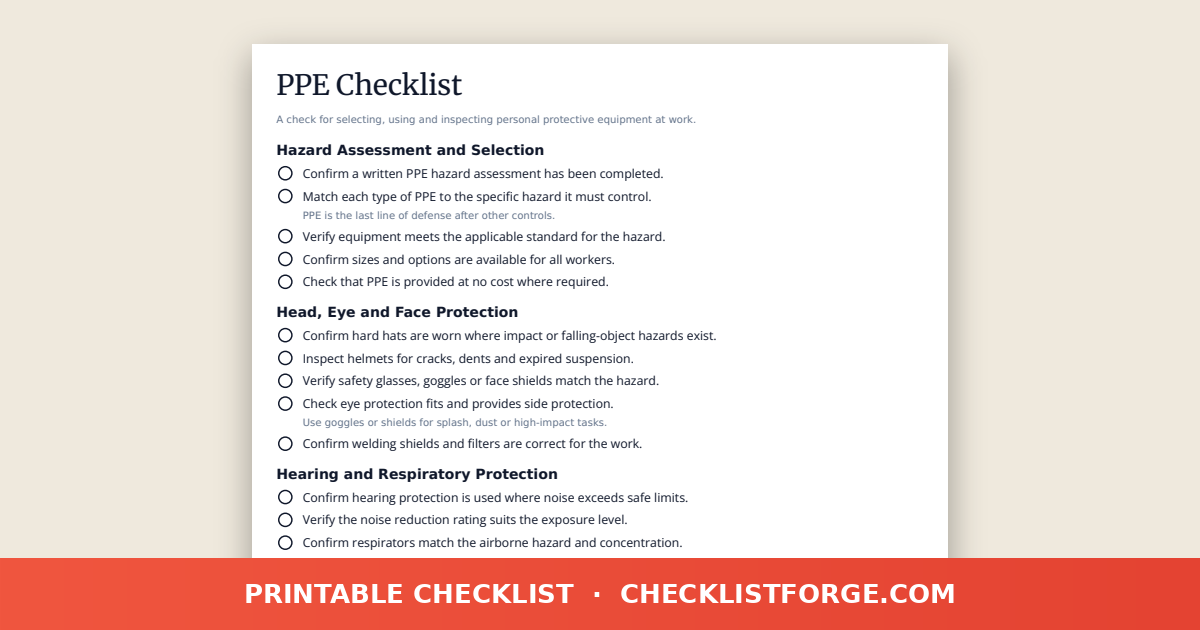
- Confirm a PPE hazard assessment has been completed and documented.
- Check the correct PPE is available, sized and worn for each task.
- Verify PPE is inspected, maintained and replaced when damaged.
- Confirm tools and equipment are inspected and removed from service when faulty.Tag and isolate defective equipment so it cannot be used by mistake.
- Check that safety devices and guards have not been bypassed.
Training and Communication
- Confirm new hires receive safety orientation before starting work.
- Verify task-specific and refresher training is current and recorded.
- Check that safety data sheets are accessible to all employees.
- Confirm toolbox talks or safety meetings are held and documented.
- Verify employees know how to report hazards and incidents.
Signage and Housekeeping
- Check warning, mandatory and prohibition signs are posted and legible.
- Confirm exits, hazards and equipment are clearly labeled.
- Verify walkways and work areas are clear of clutter and trip hazards.
- Check spills are cleaned promptly and absorbents are available.Keep aisles, exits and electrical panels unobstructed at all times.
- Confirm waste and chemicals are stored and disposed of correctly.
Emergency Preparedness
- Confirm the emergency action plan is documented and current.
- Check fire extinguishers, alarms and emergency lighting are working.
- Verify first aid kits are stocked and first aiders are trained.
- Confirm evacuation routes, exits and assembly points are clear and posted.
- Check that a recent drill has been carried out and logged.
- Review provisions for visitors, contractors and anyone needing evacuation assistance.
Recordkeeping and Review
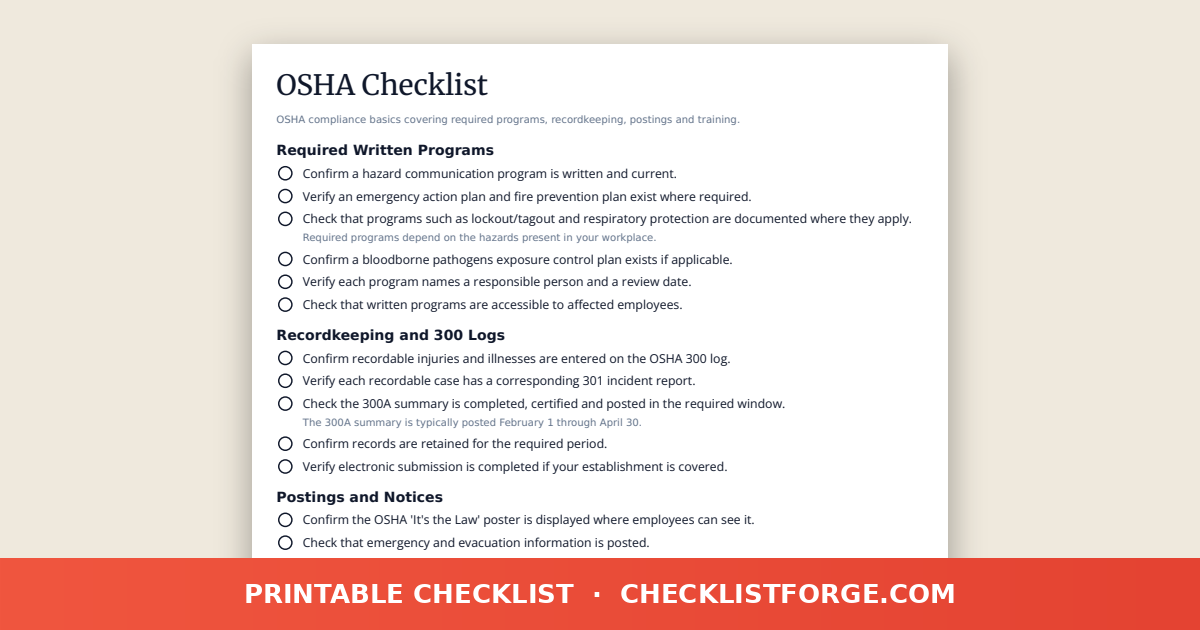
- Confirm injury and illness records are maintained as required.
- Check that inspections and corrective actions are documented and dated.
- Verify training records are complete and up to date.
- Confirm equipment inspection and maintenance logs are kept.
- Review the program annually and after any incident or process change.
- Important: this is general guidance only and does not replace OSHA regulations, formal training or your employer's safety program; confirm requirements with a qualified person.
0 / 33 done