Exterior and body
- Walk around the car checking for dents, rust, cracks or fresh damage.
- Confirm the license plates are present, secure and readable.
- Check that doors, hood and trunk open, close and latch securely.
- Inspect the windshield and windows for chips or cracks in the line of sight.
- Check that mirrors are intact, secure and adjust properly.
- Look under the car for fresh fluid leaks or hanging components.
Lights and signals
- Test both low and high beam headlights for output and aim.
- Check brake lights and the center high-mount stop lamp.Use a wall reflection or a helper to confirm brake lights at the rear.
- Verify front and rear turn signals and hazard lights flash correctly.
- Test reverse lights and the rear license plate light.
- Check parking, fog and daytime running lights where fitted.
- Confirm no warning lights stay lit on the dashboard after start-up.
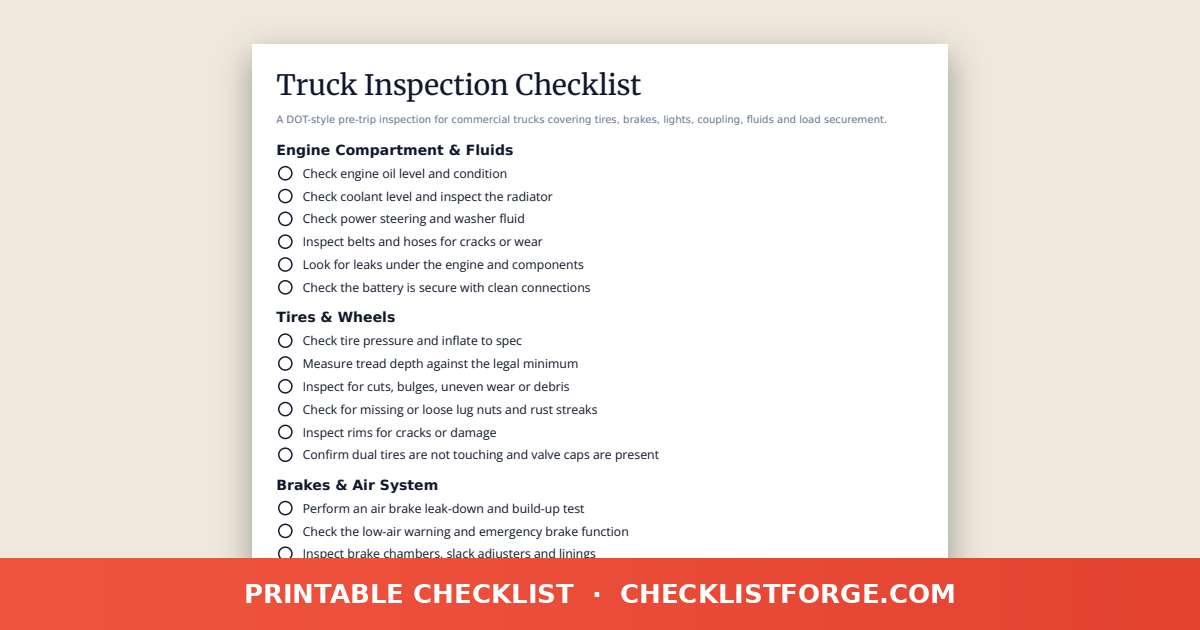
Tires and wheels
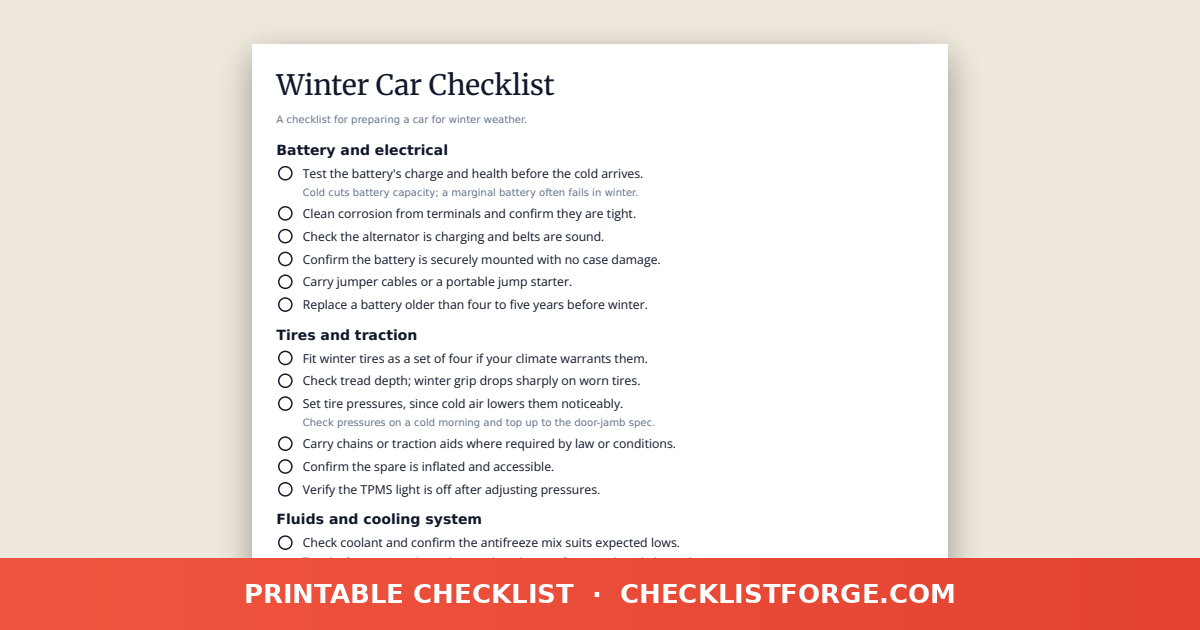
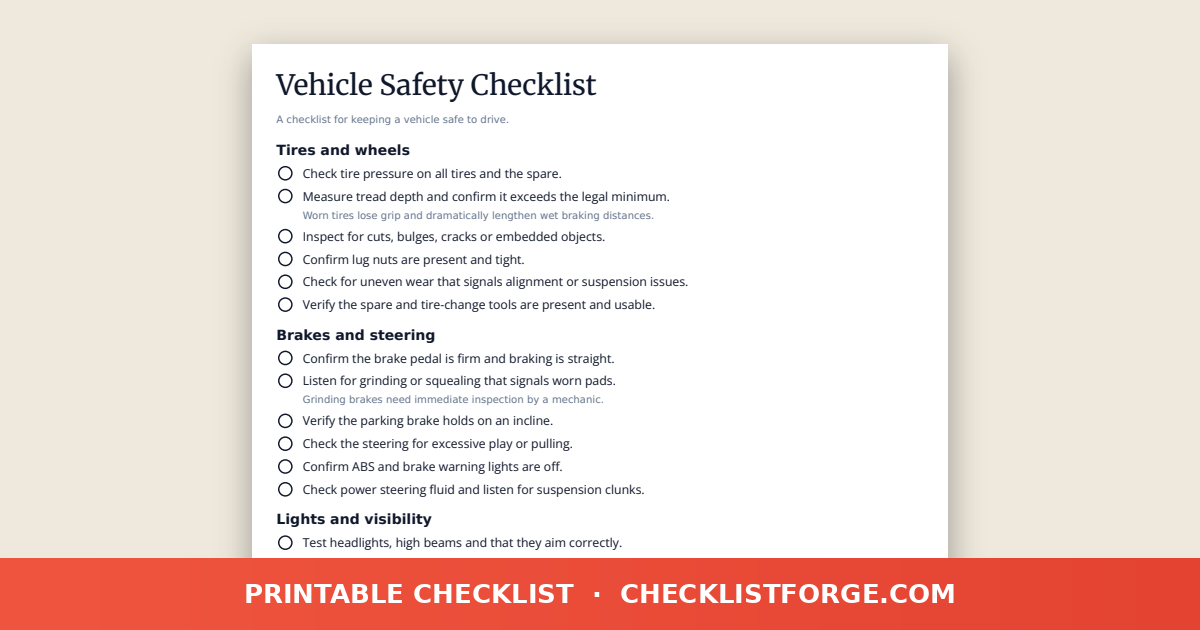
- Check tire pressure on all tires against the door-jamb sticker.
- Measure tread depth and confirm it is above the legal minimum.
- Look for uneven wear, cuts, bulges or embedded objects.
- Confirm all lug nuts are present and wheel covers are secure.
- Inspect the spare tire's pressure and condition.
- Verify the TPMS light is off or address the warning.
Brakes and steering
- Test the brake pedal for firm, consistent feel without sinking.
- Listen for grinding or squealing when braking.Grinding usually means worn pads; have the brakes inspected immediately.
- Confirm the parking brake holds the car on an incline.
- Check the steering for excessive play, pulling or vibration.
- Verify the ABS and brake warning lights are off.
- Listen for clunks over bumps that suggest worn suspension.
Fluids and under the hood
- Check engine oil level and condition on the dipstick.
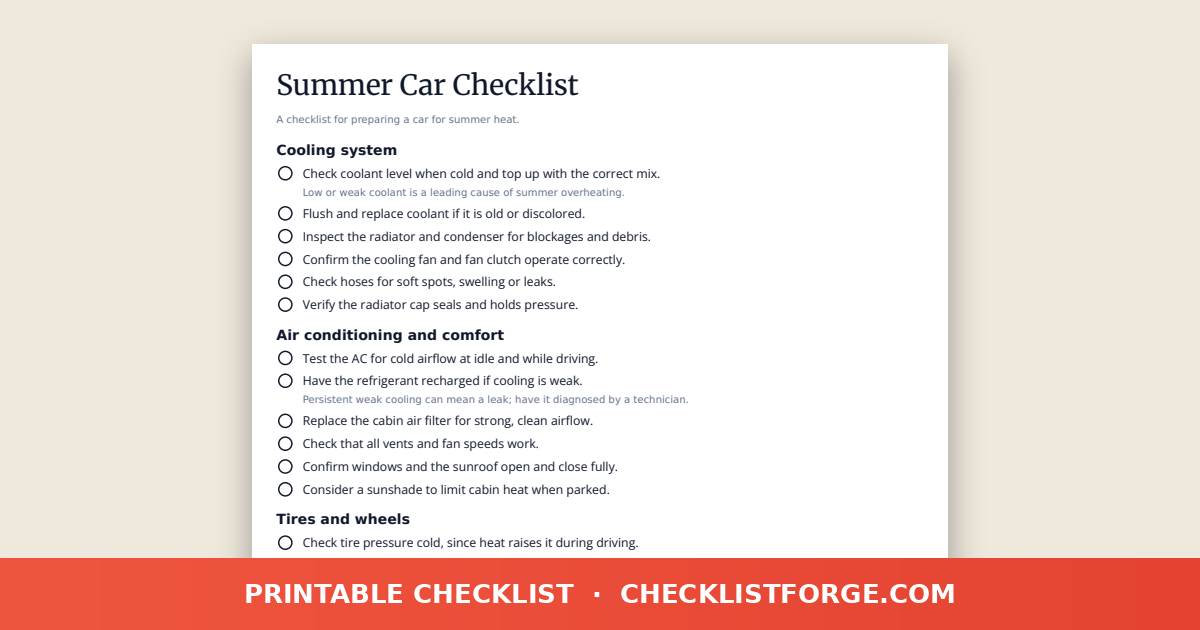
- Verify coolant level in the reservoir when the engine is cold.
- Check brake fluid and power steering fluid levels.
- Top up windshield washer fluid.
- Inspect belts and hoses for cracks, fraying or leaks.
- Check the battery terminals are clean, tight and corrosion-free.
Interior and safety equipment
- Test the horn for a clear, loud sound.
- Check that wipers clear the glass and washers spray properly.
- Confirm all seatbelts latch, retract and are undamaged.
- Verify the defroster, heater and ventilation work.
- Check that warning, oil and fuel gauges read correctly.
- Confirm a warning triangle, first-aid kit and required items are aboard.
0 / 36 done