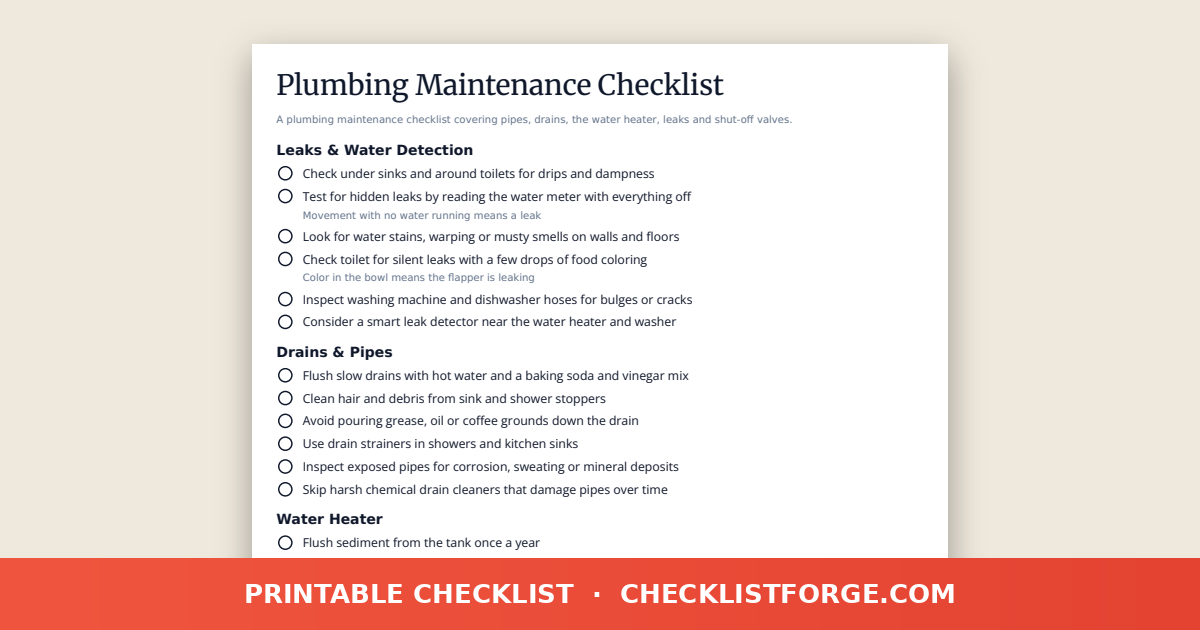
Prevent Frozen Pipes
- Insulate exposed pipes in the garage, crawl space and exterior walls
- Let faucets drip slowly during hard freezesMoving water is far less likely to freeze
- Keep the thermostat at 55°F or higher, even when away
- Open cabinet doors to let warm air reach pipes under sinks
- Know where the main water shut-off is in case a pipe bursts
- Keep the garage door closed to protect any plumbing inside
Heating System
- Replace furnace filters monthly during heavy heating use
- Keep supply and return vents clear of furniture and rugs
- Listen for unusual furnace noises and call a pro if heat fails
- Use space heaters safely — on hard floors, away from fabric, never unattended
- Run a humidifier to offset dry winter air and protect woodwork
- Have a backup heat source and fuel ready for power outages
Roof, Gutters & Ice Dams
- Watch for icicles and ice buildup at the roof edge
- Rake light roof snow from the ground with a roof rake
- Check the attic for adequate insulation and ventilationWarm attics melt snow and cause ice dams
- Keep gutters and downspouts clear so meltwater can drain
- Hire a professional for heavy roof snow or steep roofs
Indoor Safety
- Test smoke and carbon-monoxide alarms on every level
- Check CO alarms near the furnace, fireplace and attached garageCO is odorless; alarms are the only reliable warning
- Keep the fireplace flue clear and never burn trash or treated wood
- Keep the kitchen fire extinguisher accessible and charged
- Avoid running generators or grills indoors or in the garage
Windows, Doors & Drafts
- Add or replace weatherstripping on drafty doors and windows
- Use draft stoppers under exterior doors
- Apply window insulation film to single-pane windows
- Lock windows fully to seal the gap and improve security
- Keep curtains open on sunny days and closed at night for warmth
Outdoor & Storm Prep
- Keep walkways, steps and the driveway clear of snow and ice
- Stock ice melt and a working snow shovel near the door
- Confirm outdoor faucets are drained and shut off
- Stock an emergency kit: flashlight, batteries, water and blankets
- Trim or note branches weighed down by ice that could fall
0 / 32 done