Exterior and Roof
- Walk the full perimeter and look for cracked, missing, or rotting siding, trim, and fascia.
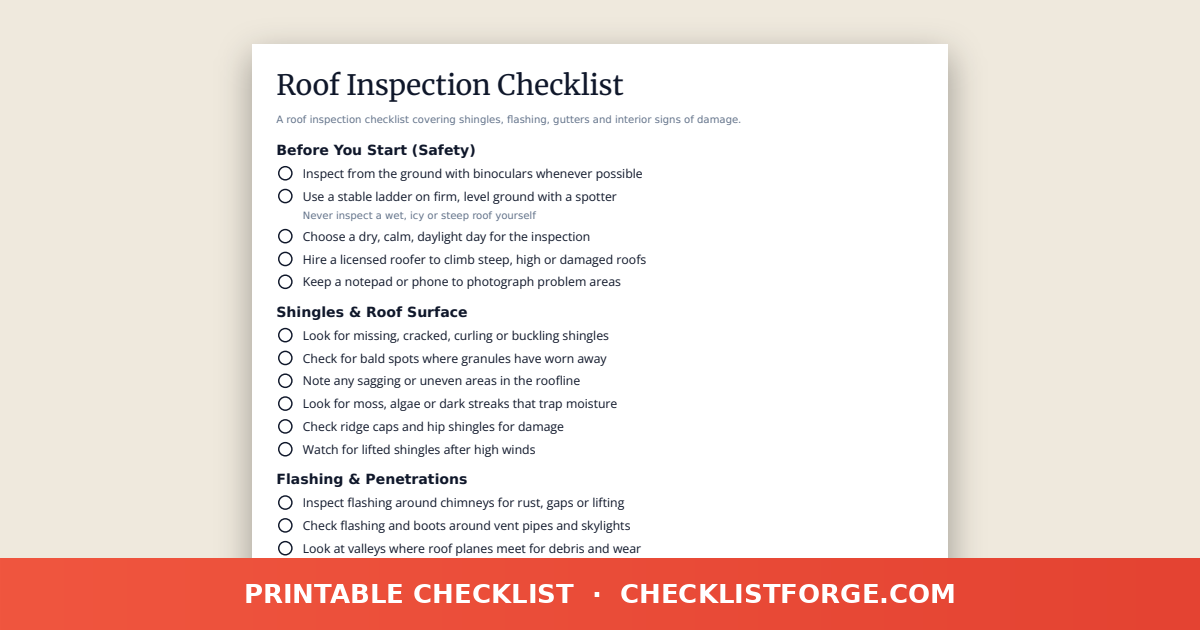
- Inspect the roof from the ground with binoculars for curled, missing, or damaged shingles.
- Check gutters and downspouts for clogs, rust, sagging, and that water drains away from the house.
- Examine chimneys, flashing, and vents for cracks, missing mortar, or loose seals.
- Note the grading: soil should slope away from the foundation, not toward it.
- Inspect decks, porches, railings, and steps for rot, wobble, and secure fasteners.
- Test exterior faucets, look at the driveway and walkways for heaving cracks, and check fences and gates.
Foundation and Structure
- Look for cracks in the foundation wider than a quarter inch, especially horizontal or stair-step patterns.
- Check basement and crawlspace walls for water stains, efflorescence, or active moisture.
- Note any musty smells that may signal mold or chronic dampness.
- Set a marble or ball on floors to spot sloping or uneven settling.
- Inspect support posts, beams, and joists for rot, sagging, or insect damage.
- Look for sticking doors and windows, which can indicate structural movement.Persistent sticking across many openings is more concerning than one door.
- Check sump pumps and drainage systems for proper operation and recent water marks.
Plumbing
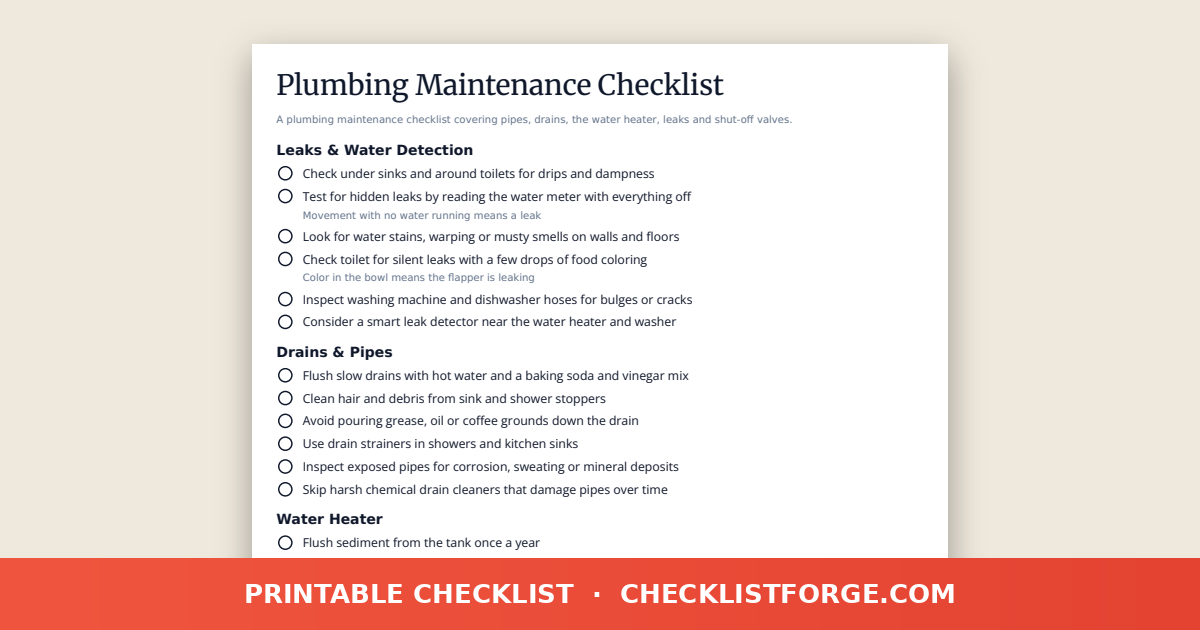
- Run every faucet, shower, and tub, checking water pressure and how quickly drains clear.
- Look under sinks for leaks, water stains, corrosion, and signs of past repairs.
- Flush all toilets and confirm they refill and shut off without running or rocking.
- Identify the water heater's age, capacity, and any rust, leaks, or corrosion at fittings.
- Note the pipe material; older galvanized steel or polybutylene may need replacement.Lead pipes or solder are a health concern—flag for professional testing.
- Locate the main water shutoff valve and confirm it is accessible and operable.
- Check for water stains on ceilings below bathrooms, which often reveal hidden leaks.
Electrical
- Open the electrical panel cover and check for scorch marks, rust, double-tapped breakers, or a recalled brand.
- Test a sample of outlets in each room with an outlet tester for proper wiring and grounding.
- Confirm GFCI outlets in kitchens, baths, garages, and exteriors trip and reset correctly.
- Verify that light switches operate fixtures and that no bulbs flicker.
- Look for exposed wiring, overloaded extension cords, or amateur splices.Knob-and-tube or aluminum branch wiring warrants an electrician's review.
- Check that smoke and carbon monoxide detectors are present, correctly placed, and functional.
- Confirm the panel has adequate capacity and clear labeling of circuits.
Heating, Cooling, and Ventilation
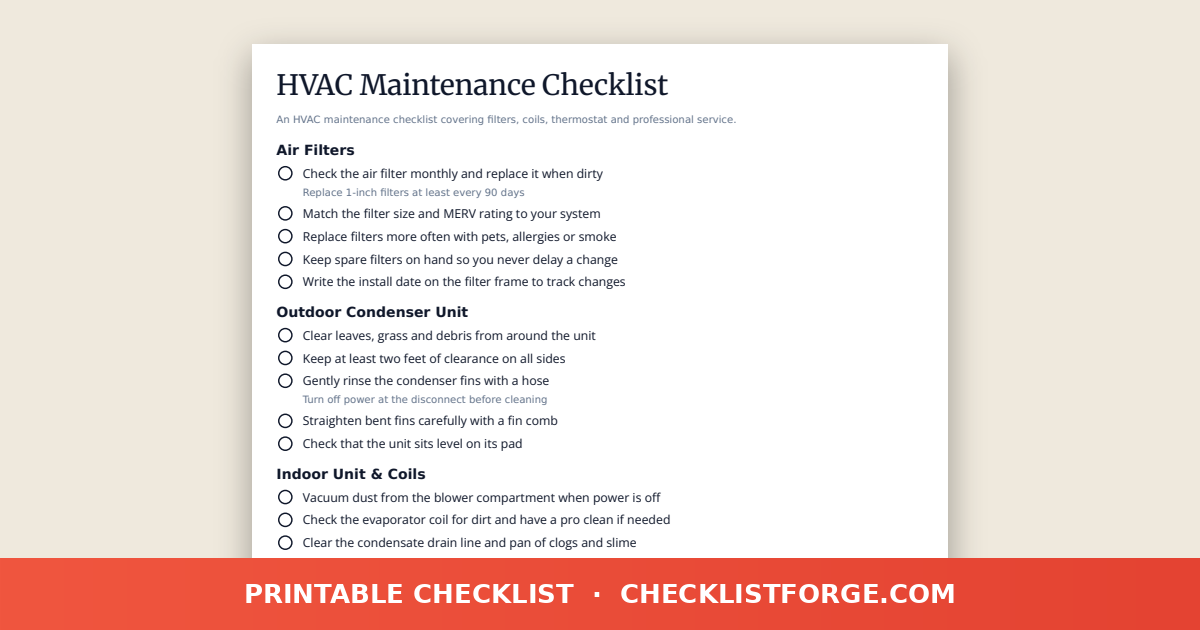
- Turn on the heat and air conditioning to confirm both cycle on and produce conditioned air.
- Check the furnace and AC unit ages, looking for rust, corrosion, or deferred maintenance.
- Inspect and replace dirty air filters, and note when the system was last serviced.
- Examine visible ductwork for disconnects, leaks, or missing insulation.
- Feel airflow at several supply registers to confirm balanced delivery.
- Verify that bathroom and kitchen exhaust fans vent outside, not into the attic.Improperly vented fans cause moisture buildup and mold.
- Check the thermostat operation and any heat pump or boiler for unusual noises.
Interior, Kitchen, and Baths
- Scan walls and ceilings in every room for cracks, water stains, and patched repairs.
- Open and close all windows and doors, checking locks, screens, and seals.
- Walk floors listening for squeaks and feeling for soft, sloping, or springy spots.
- Test kitchen appliances—range, oven, dishwasher, disposal, and vent—for basic operation.
- Inspect countertops, cabinets, and backsplashes for water damage and loose fittings.
- Check bathrooms for caulk gaps, loose tiles, soft subflooring, and proper ventilation.
- Look for signs of pests such as droppings, nests, or chewed materials in corners and cabinets.
Attic, Insulation, and Safety
- Access the attic and inspect for daylight, roof leaks, water stains, and adequate insulation depth.
- Confirm attic ventilation is unobstructed and free of mold or rotted sheathing.
- Check that insulation is present and even in the attic, walls, and any crawlspace.
- Test garage doors, auto-reverse safety sensors, and the fire-rated door to the living space.
- Verify stair railings, deck rails, and balusters are secure and at safe heights.
- Locate fire extinguishers, confirm detector battery dates, and plan two exit routes.Replace smoke and CO detectors older than ten years.
- Compile your notes and photos, then schedule a licensed inspector for anything you flagged as unsure.
0 / 49 done