next to a line leaves it out of your download — no copy, no account.
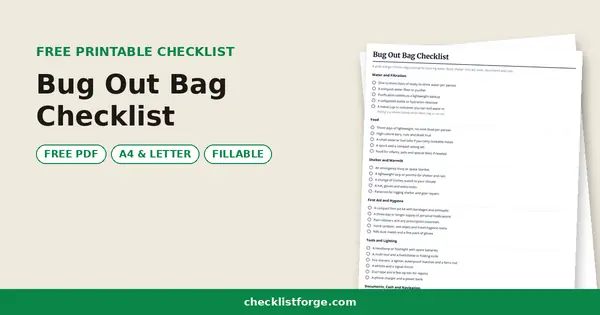
Documents (copies, sealed in a waterproof bag)
- Passports, driving licences and birth certificates
- Insurance policies: home, car, health, life
- Deeds, lease or mortgage papers
- Bank and credit card details
- A printed list of emergency contactsWritten on paper, because a dead phone takes your contacts with it.
- Medical records, allergies and prescriptions
- A USB drive with scans of everything above
- Recent photos of family members and petsUsed to identify them if you are separated.
Water and food
- One litre of water per person, plus a filter or purification tablets
- Three days of food that needs no cooking
- A manual can opener if any of it is tinned
- Food for any dietary restriction in the householdShelters rarely cater for allergies or infant formula.
Medication and first aid
- Seven days of every prescription medicine
- A written list of medicines with doses and prescriber
- First aid kit with bandages, antiseptic and painkillers
- Spare glasses, contact lenses and solution
- Hearing aid batteries or other device spares
- Diary a date to rotate anything with an expirySet a calendar reminder every six months; this is the step that gets skipped.
Power and communication
- Power bank, charged, plus cables for every device
- Hand-crank or battery radio
- Torch and spare batteries
- Whistle
- Paper map of the area with two routes out markedPhone navigation fails when the network is down or towers burn.
Cash and keys
- Cash in small notesCard readers need power and a network; neither is reliable in an evacuation.
- Spare house and car keys
- A written note of where the household will meet
Clothing and shelter
- One change of clothing per person
- Sturdy closed shoes
- Rain jacket or poncho
- Emergency blanket or sleeping bag
- Work gloves
- N95 masksSmoke and demolition dust are the common hazards after a fire or quake.
People who need their own bag
- Infants: formula, bottles, nappies, wipes
- Children: one comfort item eachSmall thing, large difference on the first night away.
- Older adults: mobility aids, spare batteries, care plan
- Pets: carrier, lead, food, vaccination records
Keeping it ready
- Store the bag where you can reach it without going upstairs
- Tell everyone in the house where it is
- Recharge the power bank every few months
- Review the whole bag twice a year
- Re-cut it as children grow or medication changes
0 / 41 done