Emergency Preparedness Checklist

A complete household readiness checklist covering your plan, supplies, documents, communication and special needs.

Published June 21, 2026

Make a Family Emergency Plan

  • Sign up for local emergency alerts and warnings
  • Choose two meeting places: one near home and one outside the neighborhood
  • Pick an out-of-town contact everyone can call or text
    Texts often go through when calls fail during an emergency
  • Map at least two evacuation routes out of your area
  • Plan how to reunite with children at school or daycare
  • Practice the plan with the whole family twice a year

Store Water and Food

  • Store one gallon of water per person per day for at least three days
  • Keep a three-day supply of non-perishable food per person
  • Include a manual can opener and basic eating utensils
  • Add food for infants, pets and anyone with special diets
  • Label storage dates and rotate stock before it expires

Build the Core Supply Kit

  • Stock a first aid kit and any prescription medications
  • Pack flashlights and a battery- or hand-crank radio
  • Keep extra batteries and a power bank for phones
  • Add a whistle to signal for help
  • Include dust masks, work gloves and plastic sheeting
  • Pack moist towelettes, garbage bags and ties for sanitation

Gather Important Documents

  • Copy IDs, passports, birth and marriage certificates
  • Save insurance policies, deeds and lease agreements
  • List bank, medical and emergency contact information
  • Store copies in a waterproof bag and a secure cloud account
  • Keep some cash in small bills in case card systems are down

Set Up Communication

  • Save emergency contacts on every family member's phone
  • Write key numbers on a card in case phones die
  • Keep chargers, a power bank and a car charger ready
  • Agree on a check-in time and method if you are separated
    A shared group text or messaging thread keeps everyone updated
  • Know how to receive alerts if the power and internet are out

Plan for Special Needs and Pets

  • Pack a week of medications and copies of prescriptions
  • Include supplies for infants, seniors and disabilities
  • Store spare glasses, hearing-aid batteries and mobility aids
  • Prepare food, water, leash, carrier and vaccination records for pets
  • Identify pet-friendly shelters or hotels along evacuation routes
  • Add comfort items and activities for children

0 / 33 done
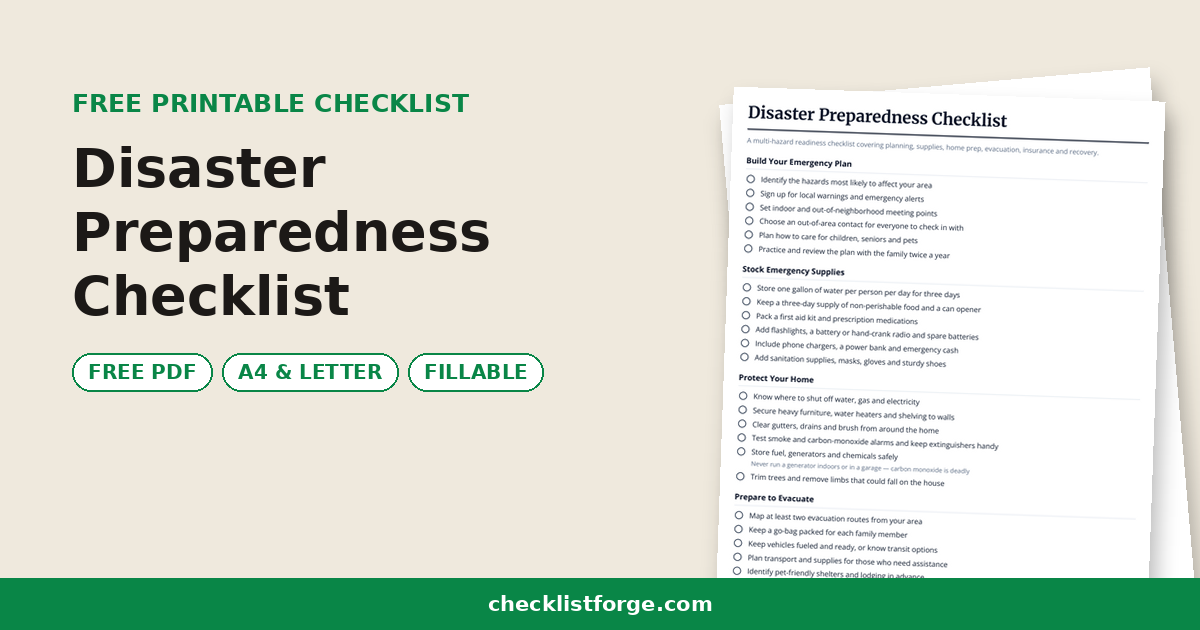
An emergency preparedness checklist is a step-by-step guide to getting your household ready for disasters and unexpected events. It walks you through making a family plan, building a 72-hour supply kit, gathering important documents, setting up communication, and covering the needs of children, seniors and pets.

Preparedness is not about predicting which disaster will strike — it is about being ready for any of them. The same plan and kit help you through a power outage, a wildfire evacuation, a hurricane or a winter storm.

Work through one section at a time. Most families can complete the core steps over a weekend, then refresh the kit and review the plan twice a year.

Ideal for families, renters and homeowners alike. Print this checklist or download the PDF, post it on the fridge, and check off each task as you build your readiness.

FAQ

How much water should I store for an emergency?

Store at least one gallon of water per person per day for a minimum of three days — that covers drinking and basic sanitation. Keep more if you have children, pets, or live in a hot climate, and aim for a two-week supply at home when you can.

How long should my emergency supplies last?

Build at least a three-day (72-hour) supply for evacuation and aim for two weeks of supplies to shelter at home. Authorities such as Ready.gov and the Red Cross recommend the 72-hour minimum as a baseline for every household.

What is the most important first step in emergency preparedness?

Make a written family emergency plan. Decide how you will get alerts, where you will meet, how you will communicate if cell service is down, and your evacuation routes. A plan turns a kit into a coordinated response.

How often should I update my emergency kit?

Review your kit at least twice a year. Rotate food and water before they expire, refresh medications, replace dead batteries, and update documents and clothing sizes for growing children.

Is this emergency preparedness checklist printable?

Yes. Print it or download the PDF, keep a copy with your kit and one on the fridge, and tick off each task as your household gets ready.