Hydration Checklist

A practical checklist of habits, warning signs and situations that help you stay properly hydrated through the day.

Published June 30, 2026

Daily Hydration Habits

  • Drink a glass of water shortly after waking up
  • Keep a refillable water bottle within reach all day
  • Have a drink with every meal and snack
  • Sip steadily rather than gulping large amounts at once
    Spreading intake through the day helps your body absorb fluids better.
  • Set a phone or watch reminder if you tend to forget
  • Eat water-rich foods like fruit, salad and soup

Know the Signs of Dehydration

  • Check that your urine is pale yellow, not dark
  • Notice thirst and a dry mouth as early cues
  • Watch for headache, tiredness or trouble concentrating
  • Be alert to dizziness or feeling lightheaded when standing
  • For children and older adults, watch for fewer bathroom trips or confusion
    These groups can dehydrate quickly and may not feel thirsty.

Drink More in Heat & Humidity

  • Increase fluids on hot or humid days, even without thirst
  • Carry extra water when spending time outdoors
  • Take shade and water breaks during peak heat
  • Watch for heavy sweating, cramps or feeling faint
    These can signal heat-related illness that needs cooling and fluids.
  • Choose cool drinks and avoid excess alcohol in the heat

Hydrate Around Exercise

  • Drink water before you start a workout
  • Sip fluids during longer or more intense sessions
  • Rehydrate after exercising to replace what you lost
  • For long or sweaty sessions, consider an electrolyte drink
    Plain water is enough for most everyday activity under an hour.
  • Weigh up the conditions: heat and humidity raise your needs

Make It Easier

  • Add lemon, cucumber or berries to flavor water naturally
  • Keep a glass or bottle on your desk as a visual cue
  • Pair drinking with routines like meals or breaks
  • Choose a marked bottle to track how much you have had
  • Track your hydration habits with this printable checklist
  • Important: this is general information, not medical advice
    If you have a condition affecting fluid intake or suspect serious dehydration, consult a doctor.

0 / 27 done
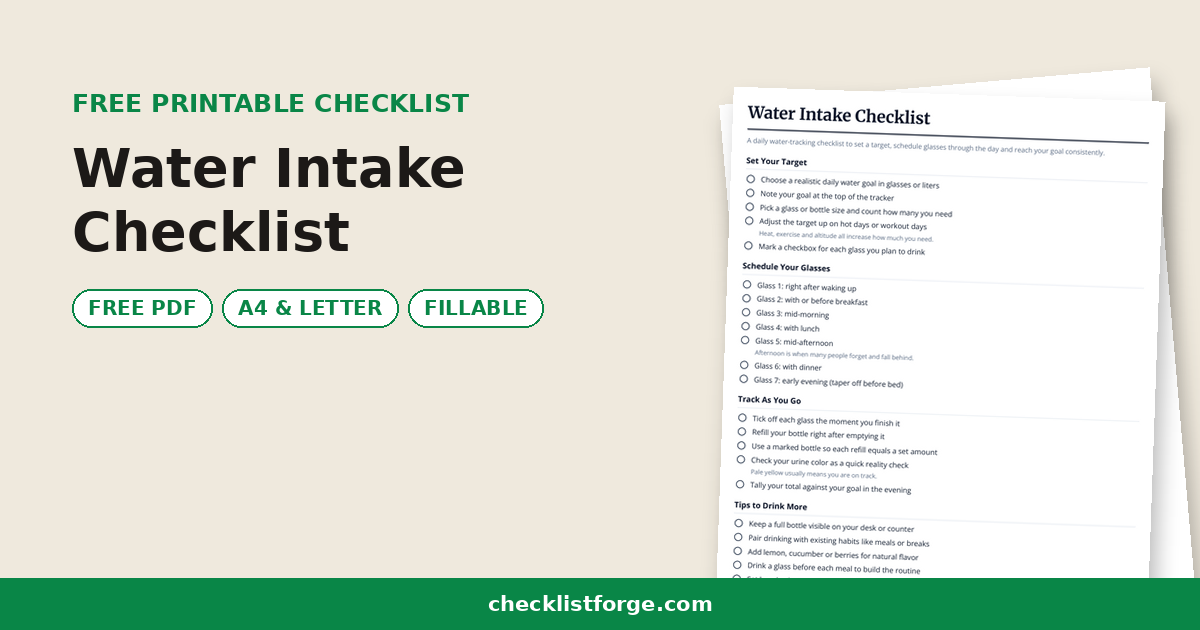
A hydration checklist is a set of habits and reminders that help you stay properly hydrated: drinking fluids steadily through the day, spotting early signs of dehydration, and adjusting how much you drink in heat or during exercise. It keeps fluid intake from slipping when life gets busy.

Staying hydrated supports energy, focus, digestion and temperature control. Most of your fluids come from water, but other drinks and water-rich foods count too. Thirst, urine color and how you feel are useful day-to-day signals.

The printable format makes it easy to keep on your desk or fridge as a gentle nudge. Save or print the PDF and tick off your hydration habits each day.

Whether you are a beginner building the habit or keeping a family hydrated through a hot summer, this checklist keeps fluids on your radar without overcomplicating it.

FAQ

How much water should I drink a day?

A common guideline is around 6 to 8 cups of fluid a day, but needs vary with body size, activity, climate and health. Use thirst and pale yellow urine as everyday signs that you are drinking enough.

What are the early signs of dehydration?

Common signs include thirst, dry mouth, dark yellow urine, tiredness, headache, dizziness and reduced concentration. In young children and older adults, watch for fewer wet diapers or trips to the bathroom and confusion.

Do drinks other than water count?

Yes. Water is best, but milk, unsweetened tea, coffee in moderation and water-rich foods like fruit and soup all contribute to your fluid intake. Limit sugary and heavily caffeinated drinks.

Can I print this hydration checklist?

Yes. You can print the checklist or download it as a PDF, then tick off your hydration habits and reminders throughout the day.

Is this medical advice?

No. This is general information about everyday hydration, not medical advice. If you have a heart, kidney or other condition that affects fluids, or you suspect serious dehydration, contact a doctor.