Plan and prepare
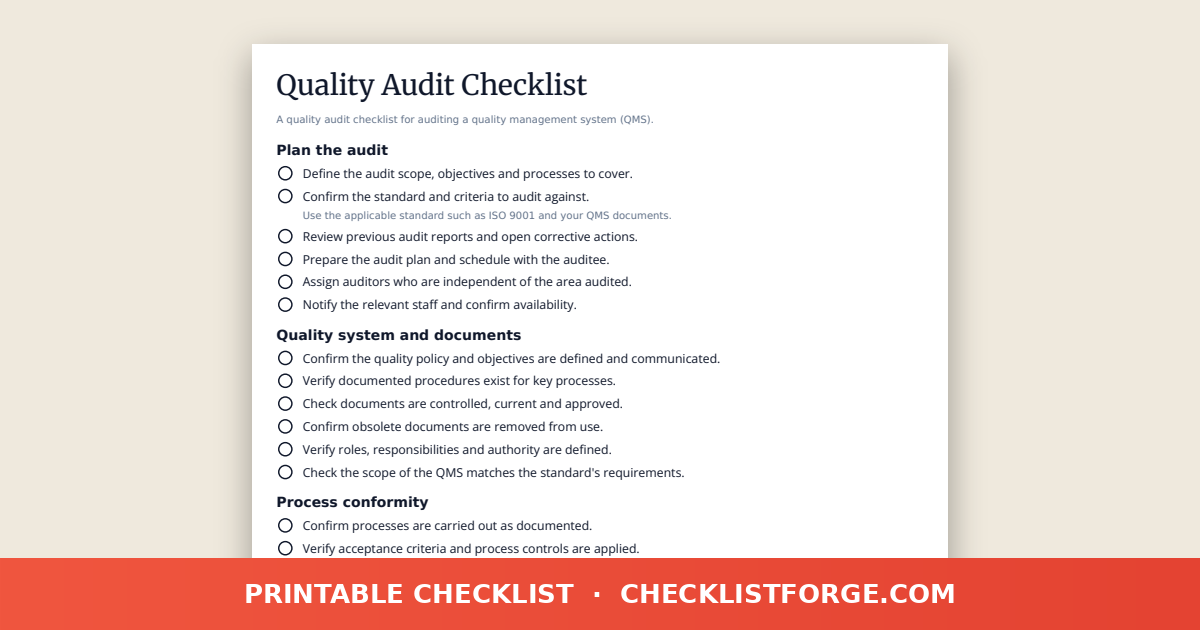
- Confirm the purpose and objectives of the audit.
- Define the scope, including areas, processes and period covered.
- Identify the criteria to audit against.Use applicable standards, policies, contracts and your procedures.
- Review background documents and prior audit results.
- Assign auditors who are independent of the area audited.
- Prepare the audit plan, schedule and notify the auditee.
Opening and logistics
- Hold an opening meeting to confirm scope and plan.
- Agree the schedule, contacts and access required.
- Confirm confidentiality and how findings will be handled.
- Explain the methods and sampling approach.
- Confirm safety requirements and site access rules.
- Set expectations for the closing meeting and report.
Gather evidence
- Interview relevant staff about how work is done.
- Observe activities and conditions firsthand.
- Sample and review records and documents.
- Trace transactions or items end to end where useful.
- Take notes and reference each piece of evidence.
- Verify information from more than one source where possible.
Evaluate and record findings
- Compare the evidence against the audit criteria.
- Identify conformities, nonconformities and observations.
- Classify findings by significance or risk.
- Confirm findings with the auditee to agree the facts.
- Document objective evidence for each finding.
- Note positive findings and good practice.
Report results
- Hold a closing meeting to summarize findings.
- Draft a clear, factual audit report.
- State conclusions against the objectives and criteria.
- Prioritize findings and recommended actions.
- Distribute the report to the agreed stakeholders.
- Keep the report and evidence on file.
Follow-up and closure
- Agree corrective actions with owners and due dates.
- Require root cause analysis for significant findings.
- Track actions to completion.
- Verify actions are implemented and effective.
- Close findings once evidence confirms resolution.
- Capture lessons learned for future audits.
0 / 36 done