QA/QC Checklist

A combined QA/QC checklist covering both quality assurance (process) and quality control (inspection).

Published July 7, 2026

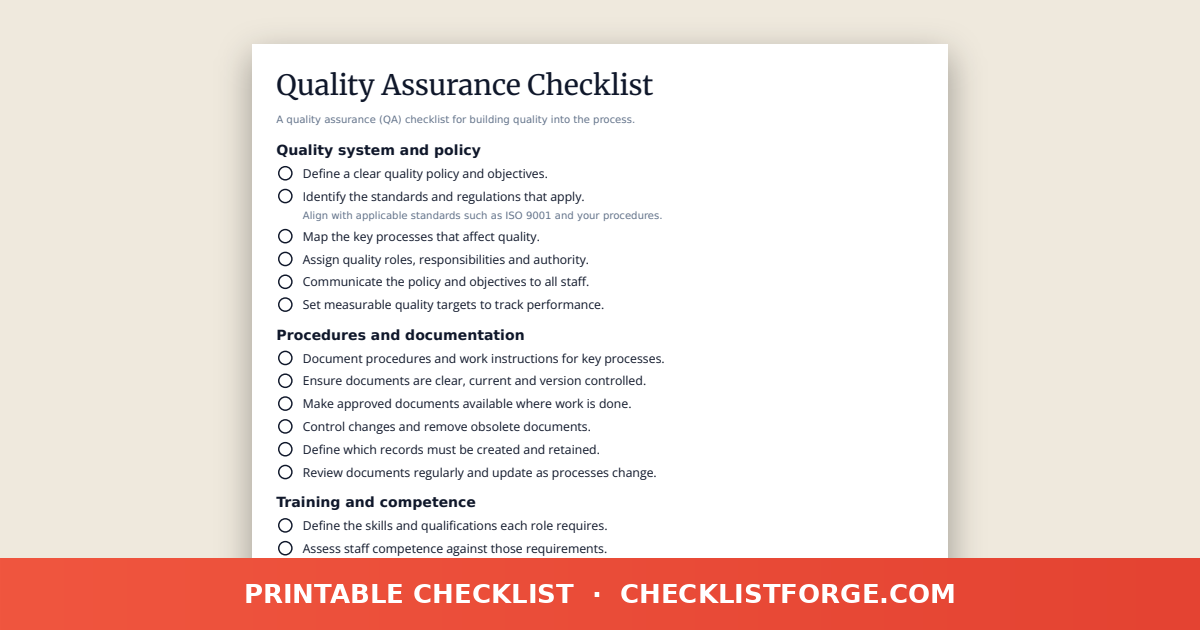
Set up the QA framework

  • Define the quality objectives and acceptance criteria for the project.
  • Identify the standards and specifications that apply.
    Align with applicable standards and your organization's quality system.
  • Document the procedures and work instructions to follow.
  • Assign quality roles and responsibilities.
  • Confirm staff are trained and competent for their tasks.
  • Establish document control for drawings and revisions.

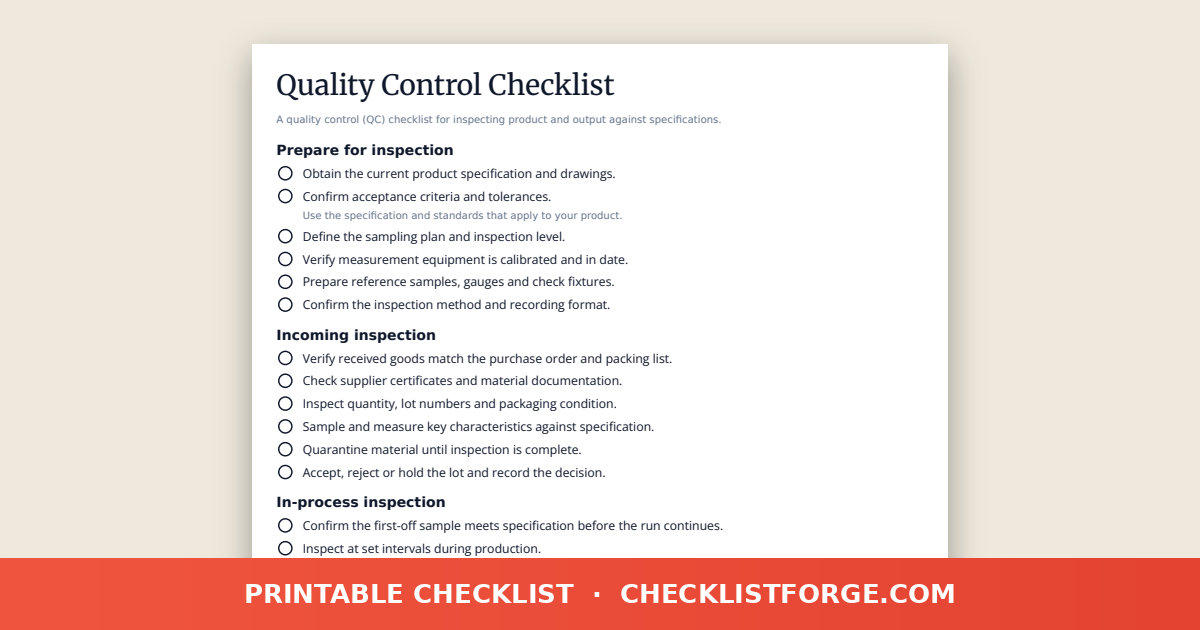
Plan inspections (QC)

  • Create an inspection and test plan with hold and witness points.
  • Define what to inspect, how, and acceptance criteria.
  • Set sampling levels and inspection frequency.
  • Confirm measuring equipment is calibrated and in date.
  • Prepare inspection forms and recording templates.
  • Schedule inspections at the defined stages.

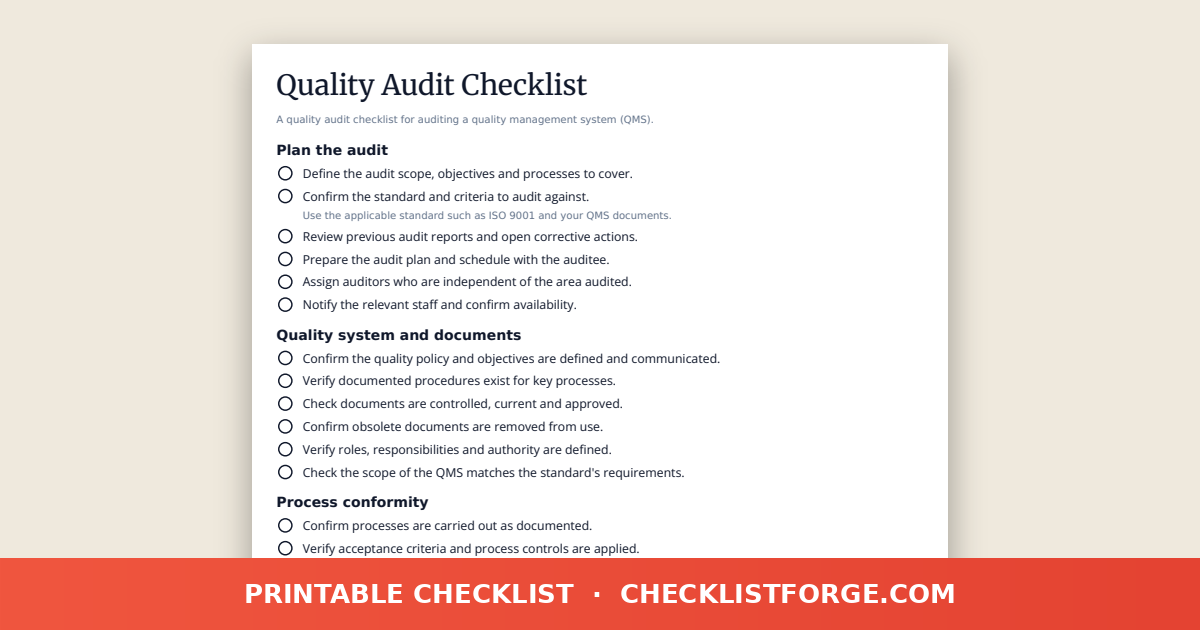
Quality assurance activities

  • Verify suppliers and subcontractors are approved and qualified.
  • Confirm incoming materials have required certificates.
  • Check that approved procedures are being followed on the job.
  • Conduct internal audits or process reviews.
  • Hold quality reviews at key milestones.
  • Capture lessons learned to improve the process.

Quality control inspections

  • Inspect incoming materials before use.
  • Carry out in-process inspections at hold points.
  • Measure key characteristics against specification.
  • Perform final inspection before release or handover.
  • Record measurements, results and inspector sign-off.
  • Segregate and label any nonconforming work.

Nonconformance and corrective action

  • Raise a nonconformance report when criteria are not met.
  • Determine the disposition: rework, repair, scrap or concession.
  • Investigate the root cause of the nonconformance.
  • Implement corrective action to prevent recurrence.
  • Verify the corrective action was effective.
  • Feed findings back into QA procedures and training.

Records and handover

  • Compile inspection records, certificates and test results.
  • Maintain traceability to materials, lots and locations.
  • Keep nonconformance and corrective action records.
  • Prepare the quality dossier or handover documentation.
  • Obtain final quality sign-off and approvals.
  • Archive records for traceability and audit.

0 / 36 done
A QA/QC checklist brings together the two halves of quality management on a project or product: quality assurance (QA) and quality control (QC). QA is the process side — procedures, standards, training and prevention — while QC is the inspection side that verifies output against specification. Used together, they prevent defects and catch the ones that slip through.

Teams often blur the two and end up with neither: inspections happen, but the underlying process is never improved, so the same defects keep returning. Treating QA and QC as distinct but linked activities gives you both prevention and detection, and a clear feedback loop between them.

This checklist helps project managers, quality engineers and site or production teams set up the QA framework, carry out QC inspections, manage nonconformances and keep the records that tie it all together. Adapt the procedures, hold points and acceptance criteria to your project, product and applicable standards.

Print the checklist for the quality file or site office, or download the PDF so the team can record inspections, sign-offs and corrective actions. Keep completed records on file for traceability, handover and audit.

FAQ

What does QA/QC mean?

QA/QC combines quality assurance and quality control. QA is the process side — procedures, standards and training that prevent defects. QC is the inspection side that verifies output meets specification. Together they prevent and detect quality problems.

What is the difference between QA and QC?

QA is proactive and process-focused: it builds quality into how work is done. QC is reactive and product-focused: it inspects output to find defects. QA prevents problems, QC catches the ones that still occur.

Do I need both on a project?

Yes. Without QA you keep fixing the same recurring defects; without QC defects reach the customer. Using both gives you prevention plus detection, and a feedback loop so inspection results drive process improvements.

What is a hold point or witness point?

A hold point is a stage where work must stop until an inspection is approved; a witness point is one a reviewer may attend but work can continue. Both are defined in an inspection and test plan per your standards.

Is this available as a printable PDF?

Yes. Print the QA/QC checklist for the quality file or site office, or download the PDF so the team can record inspections, sign-offs and corrective actions and keep them on file for audit.