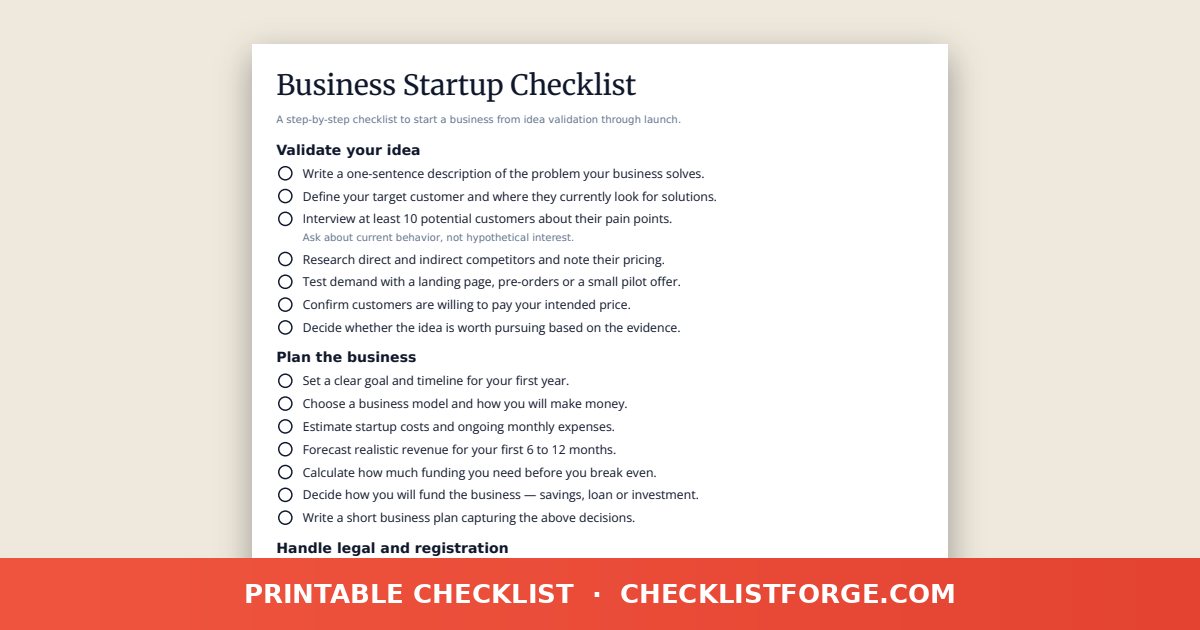
Validate the problem
- Define the specific problem and who suffers from it most.
- Interview target users about how they solve it today.
- Identify your riskiest assumption and a cheap way to test it.
- Estimate the size of the market you can realistically reach.
- Map existing alternatives and where they fall short.
- Test willingness to pay before building anything.
- Decide go or no-go based on the evidence you gathered.
Build and ship an MVP
- Define the single core value your MVP must deliver.
- Cut every feature that isn't essential to that value.
- Choose a tech stack or no-code tools you can move fast with.
- Set a realistic timeline to a usable first version.
- Recruit a small group of early users to test it.
- Instrument analytics to measure activation and retention.
- Ship, gather feedback, and iterate in short cycles.
Incorporate and protect IP
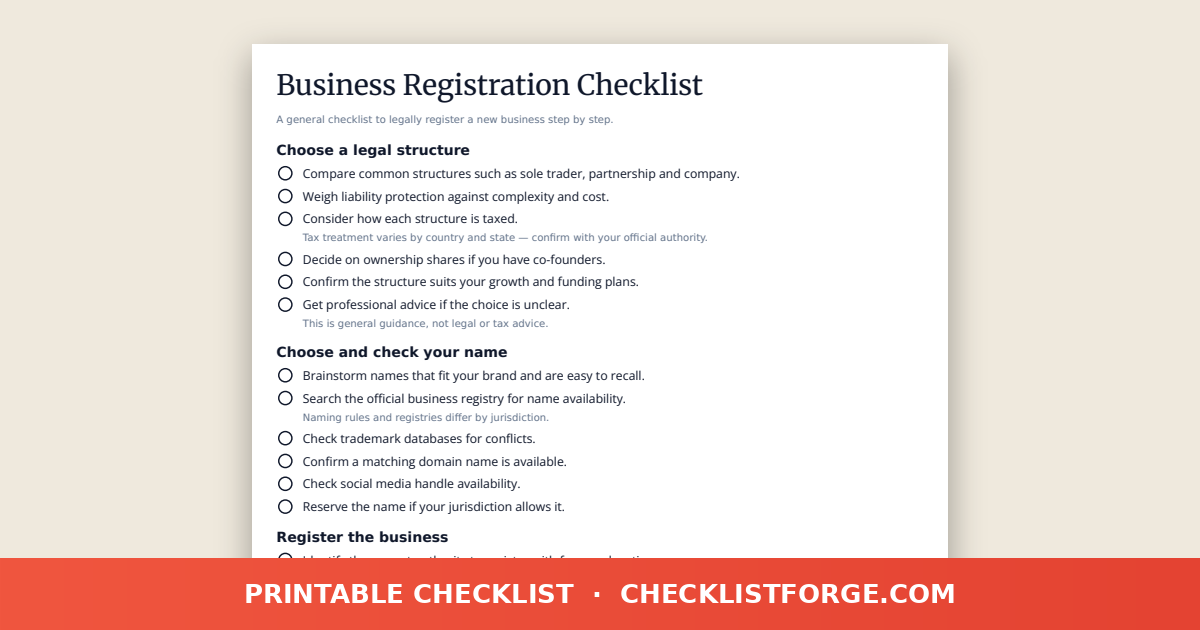
- Choose a legal structure suited to growth and investment.Structures and tax treatment vary by country and state — confirm with your official authority or a startup lawyer.
- Register the company and obtain a tax identification number.Registration steps differ by jurisdiction — check locally.
- Put a founders' agreement in writing covering equity and roles.
- Set up a vesting schedule for founder shares.
- Assign intellectual property to the company in writing.
- Protect key trademarks or domains where appropriate.
Set up finances and metrics
- Open a business bank account separate from personal funds.
- Set up bookkeeping and a simple financial model.
- Track runway and your monthly cash burn.
- Define the key metrics that prove your business works.
- Set up billing and a way to collect payments.
- Establish a basic budget and spending controls.
Build the early team
- Identify the first one or two critical roles to fill.
- Decide what to hire for versus do yourself or outsource.
- Define a simple equity and compensation framework.
- Write clear role descriptions and expectations.
- Use written offers and contracts for everyone you bring on.Employment rules vary by jurisdiction — verify locally.
- Document your mission and values to guide hiring.
Prepare to fundraise
- Clarify how much you need and what milestones it buys.
- Learn the basics of equity, valuation and dilution.
- Build a concise pitch deck and a simple financial model.
- Assemble traction evidence such as users, revenue or growth.
- Research and shortlist investors that fit your stage.
- Prepare a data room with key documents organized.
- Understand basic term sheet concepts before negotiating.Investment terms carry legal and tax consequences — seek qualified advice.
0 / 39 done