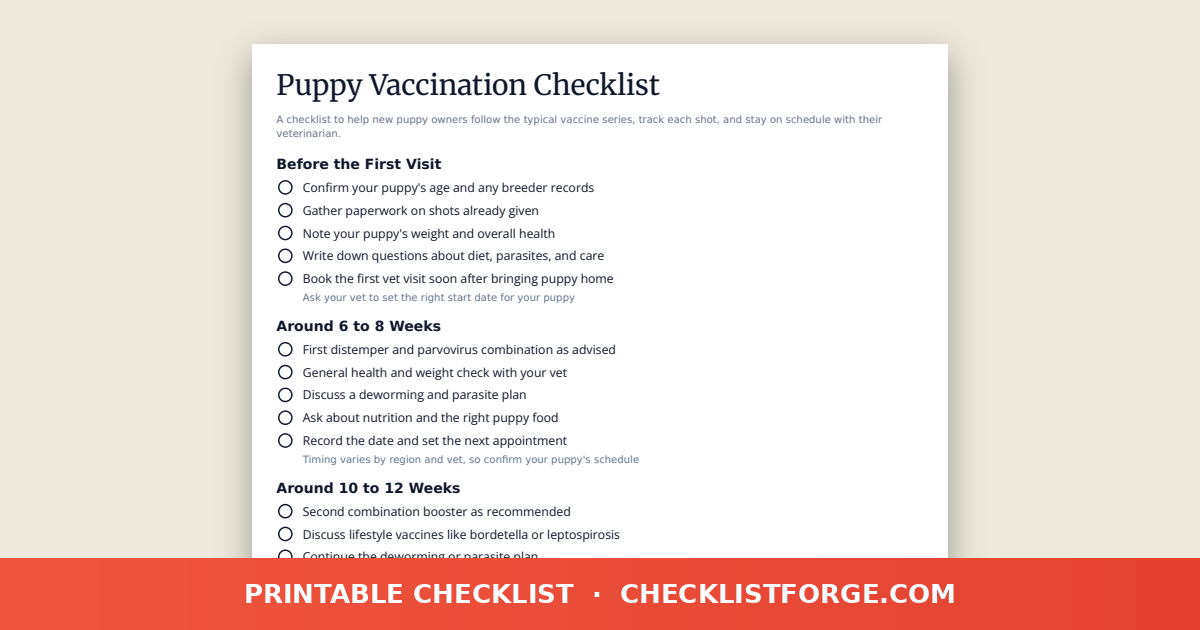
Vet care and vaccinations
- Keep every scheduled vaccination and booster appointment.
- Follow your vet's deworming and parasite-prevention plan.
- Discuss spay or neuter timing for your puppy.
- Confirm microchip registration is up to date.
- Track weight and growth at each visit.Ask your veterinarian what is healthy for your breed.
- Important: This is general information, not veterinary advice. Always follow your veterinarian's schedule for vaccinations and health care.
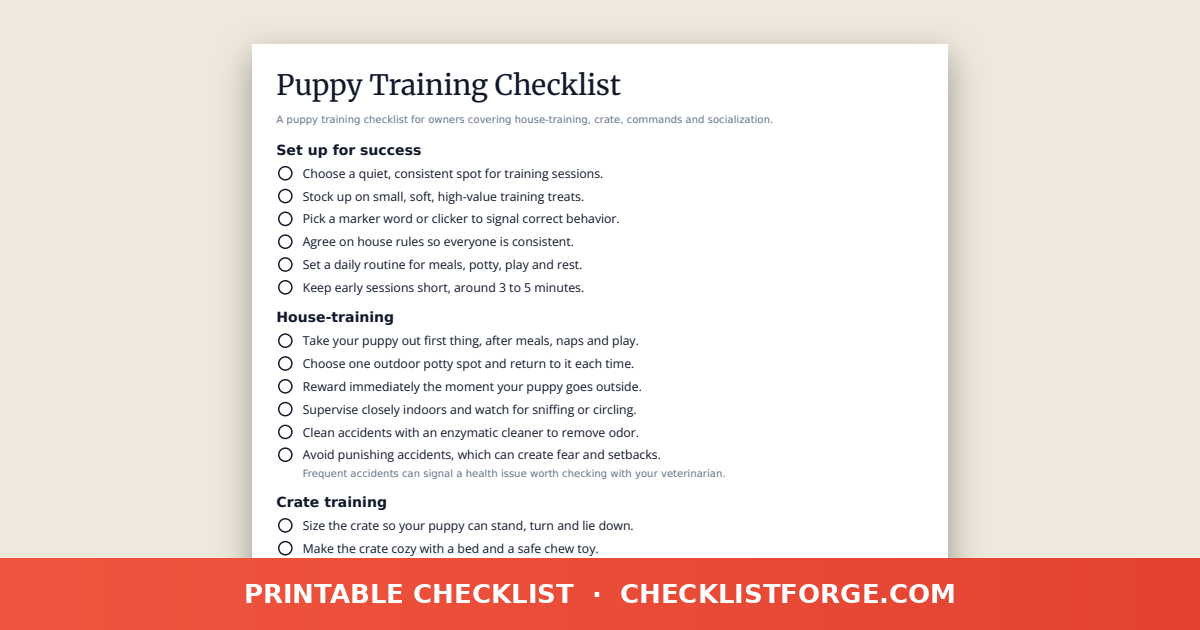
House training and crate
- Maintain a consistent potty schedule and reward success.
- Build positive crate association with short, happy sessions.
- Gradually increase alone-time to prevent separation anxiety.
- Use enzyme cleaner and stay patient with accidents.
- Set clear house rules everyone follows consistently.
- Establish predictable feeding, potty, and rest routines.
Socialization
- Introduce new people, sounds, and surfaces positively and gradually.
- Expose your puppy to gentle handling of paws, ears, and mouth.
- Arrange safe, supervised meetings with vaccinated dogs.
- Practice calm car rides and short outings.
- Reward confidence and never force a fearful puppy.
- Consider a reputable puppy socialization class.
Basic training
- Teach name recognition and a reliable recall.
- Start with sit, down, stay, and leave it using rewards.
- Practice loose-leash walking in short sessions.
- Redirect biting and chewing to appropriate toys.
- Keep training short, positive, and consistent.
- Reinforce calm behavior and gentle greetings.
Nutrition and growth
- Feed an age-appropriate puppy food in measured meals.
- Transition foods gradually to avoid stomach upset.
- Adjust portions as your puppy grows.Confirm amounts with your veterinarian.
- Provide fresh water at all times.
- Limit treats and avoid foods toxic to dogs.
- Plan the switch to adult food on your vet's timeline.
Grooming and health habits
- Brush the coat regularly to build tolerance and reduce shedding.
- Introduce nail trims, ear checks, and tooth care gently.
- Bathe occasionally with a puppy-safe shampoo.
- Check skin and coat for fleas, ticks, and irritation.
- Watch appetite, energy, and stool for any changes.
- Provide daily exercise suited to your puppy's stage and breed.
0 / 36 done