Before you bring a pet home
- Research the species and breed to match energy, space, and time to your lifestyle.
- Confirm housing rules, pet deposits, or landlord approval if you rent.
- Budget for ongoing costs like food, vet visits, and emergencies.
- Agree on who handles feeding, walks, and cleanup in your household.
- Choose a veterinarian and note the nearest emergency clinic.Save both numbers in your phone before pickup day.
- Set a realistic arrival date when you can be home to help your pet settle.
Pet-proofing your home
- Secure or remove toxic plants, foods, and household chemicals.
- Tuck away electrical cords, small objects, and choking hazards.
- Block off unsafe rooms, stairs, or balconies as needed.
- Set up a quiet, defined space where your pet can rest undisturbed.
- Secure trash cans and store medications out of reach.
- Check fences, screens, and doors for gaps an animal could slip through.
Essential supplies
- Food and water bowls suited to your pet's size.
- Age- and species-appropriate food recommended for your pet.
- A comfortable bed and a safe carrier or crate for transport.
- Collar, harness, leash, or species-appropriate containment.
- Toys and enrichment to keep your pet stimulated.
- Grooming basics and cleanup supplies for accidents.
Identification and safety
- Fit a collar with an ID tag showing your phone number.
- Ask your veterinarian about microchipping and register your details.
- Take clear photos of your pet in case they ever go missing.
- Keep a recent record of weight, markings, and any medical notes.
- Note your pet's name, age, and habits for sitters or emergencies.
- Childproof or pet-gate areas to prevent escapes during the first days.
First vet visit and health
- Book a wellness exam within the first week home.
- Bring any paperwork, records, or a stool sample if requested.
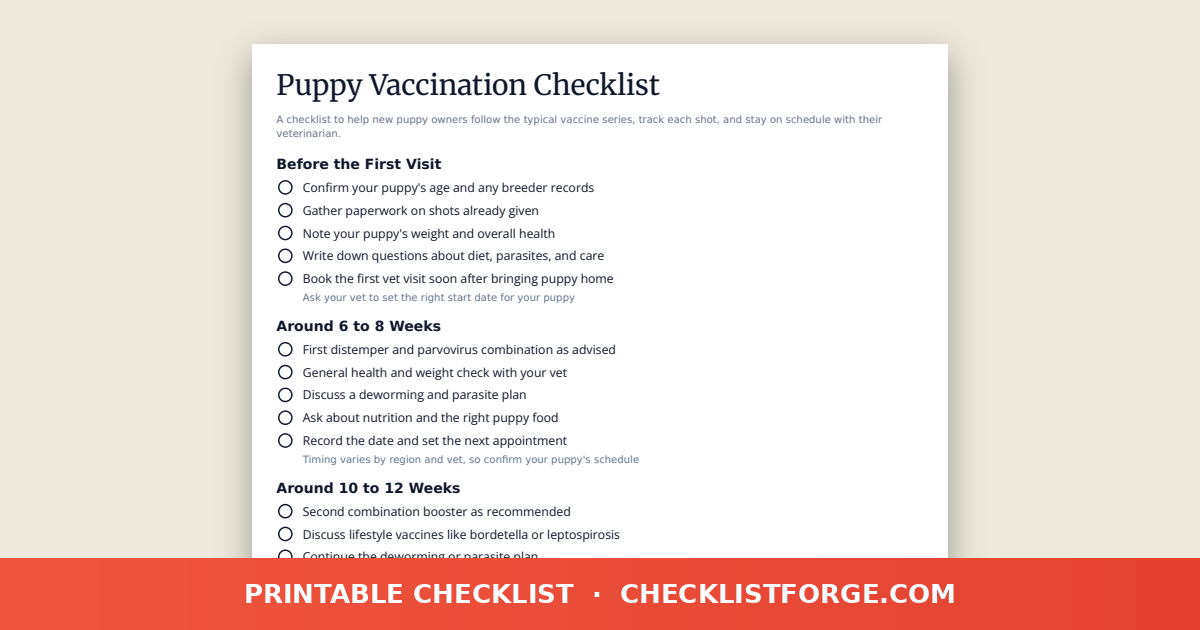
- Discuss vaccinations and a schedule that fits your pet's age.
- Ask about parasite prevention for fleas, ticks, and worms.
- Talk through spay or neuter options and timing.
- Important: This is general information, not veterinary advice. Always consult a veterinarian about your pet's health, diet, and vaccination needs.
Building a daily routine
- Set consistent feeding times so your pet knows what to expect.
- Plan exercise, walks, or play suited to your pet's energy.
- Establish bathroom or litter habits with a predictable schedule.
- Add daily handling and bonding time to build trust.
- Keep grooming and cleanup on a simple regular rhythm.
- Watch eating, drinking, and behavior, and note any changes for the vet.
0 / 36 done