Daily feeding and water
- Serve measured meals at consistent times each day.
- Provide clean, fresh water and refill it throughout the day.
- Wash food and water bowls daily to prevent buildup.
- Stick to vet-recommended food and limit treats and table scraps.
- Adjust portions for age, weight, and activity over time.Ask your veterinarian to confirm the right amount.
- Note any loss of appetite or unusual eating to mention to the vet.
Exercise and enrichment
- Provide daily exercise suited to your pet's species and energy.
- Schedule walks, play, or active time at predictable points in the day.
- Rotate toys and puzzles to keep your pet mentally stimulated.
- Offer safe outdoor or window time for fresh air and stimulation.
- Build in training or trick practice to engage your pet's mind.
- Make time for calm, undistracted bonding every day.
Hygiene and grooming
- Brush your pet's coat on a regular schedule to reduce shedding and mats.
- Bathe as needed for your pet's species and coat type.
- Check and clean ears, eyes, and teeth as recommended.
- Trim nails before they get too long or catch.
- Keep bathroom areas, litter, or cages clean daily.
- Wash bedding and soft toys weekly.
Clean living space
- Scoop, change, or clean bathroom areas every day.
- Vacuum or sweep fur and dander from your pet's main areas.
- Disinfect food and water stations regularly.
- Keep the resting area dry, warm, and free of clutter.
- Store food sealed to keep it fresh and pest-free.
- Restock supplies before they run out.
Health monitoring
- Keep up with parasite prevention for fleas, ticks, and worms.
- Give any prescribed medications exactly as directed.
- Watch weight, appetite, energy, and bathroom habits for changes.
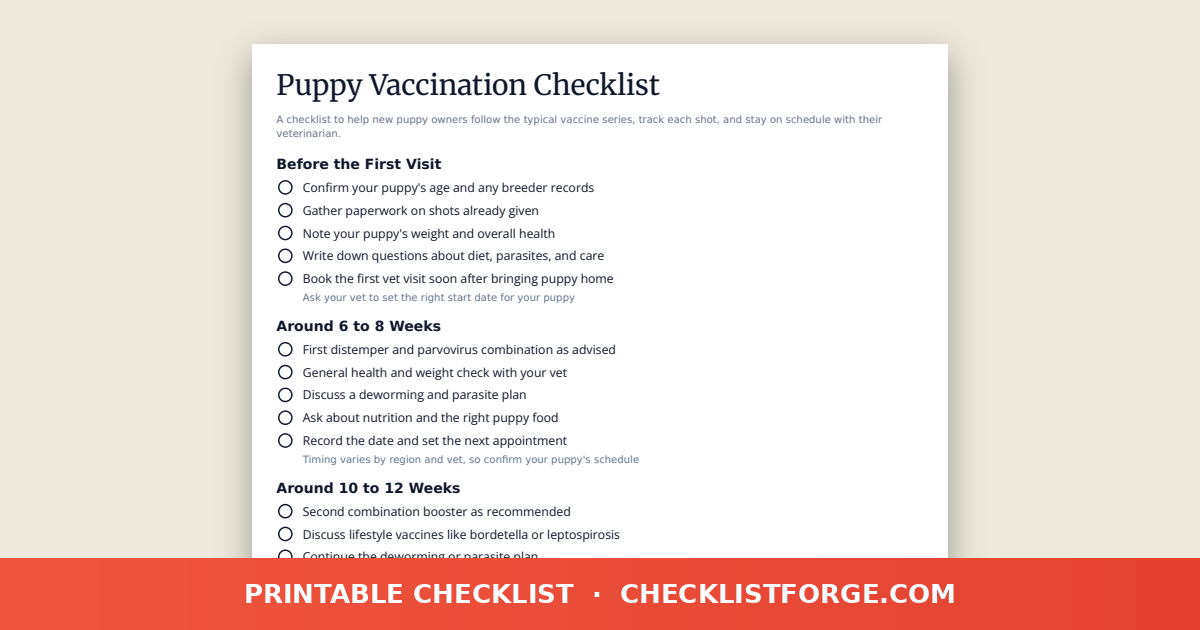
- Schedule routine wellness checkups and stay current on vaccines.
- Check skin and coat for lumps, irritation, or pests.
- Important: This is general information, not veterinary advice. Always consult a veterinarian about your pet's health, diet, and medications.
Affection and well-being
- Give daily attention, gentle handling, and praise.
- Keep routines predictable to lower stress.
- Provide a quiet, safe retreat where your pet can rest.
- Watch body language and respect when your pet wants space.
- Introduce new people, pets, and places gradually.
- Spend unhurried time together to strengthen your bond.
0 / 36 done