Puppy supplies to buy first
- Pick up puppy food and appropriately sized food and water bowls.
- Get a crate, a soft bed, and washable bedding.
- Buy a collar with an ID tag, plus a leash and harness.
- Stock puppy pads or potty supplies and enzyme cleaner for accidents.
- Choose safe chew toys to soothe teething.
- Add grooming basics like a soft brush and puppy-safe shampoo.
Puppy-proofing the home
- Move cords, shoes, and small swallowable items out of reach.
- Secure toxic plants, foods, trash, and chemicals.
- Block stairs and off-limits rooms with gates.
- Set up a confined, easy-to-clean space for unsupervised time.
- Check the yard and fences for gaps a puppy could squeeze through.
- Designate a quiet spot for the crate and naps.
Crate and potty setup
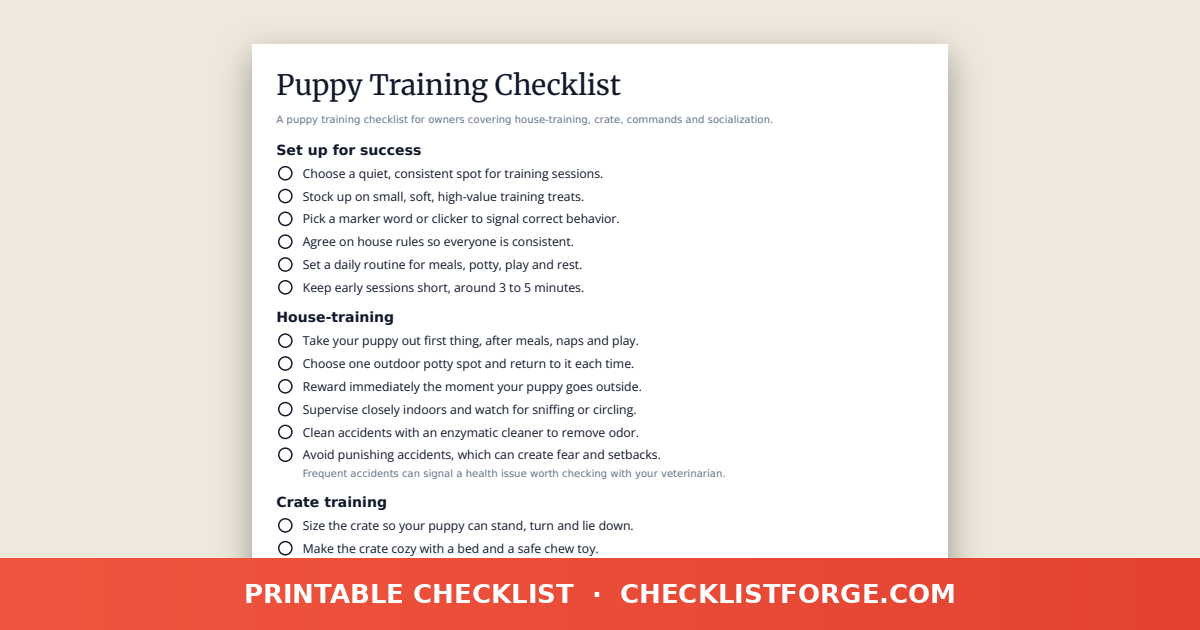
- Size the crate so your puppy can stand, turn, and lie down comfortably.
- Make the crate positive with treats, toys, and short sessions.
- Choose a consistent potty spot and route outside.Take young puppies out very frequently, including after meals and naps.
- Reward potty success immediately with praise or a treat.
- Keep enzyme cleaner ready for the accidents that will happen.
- Avoid leaving a young puppy crated longer than they can hold it.
First vet visit
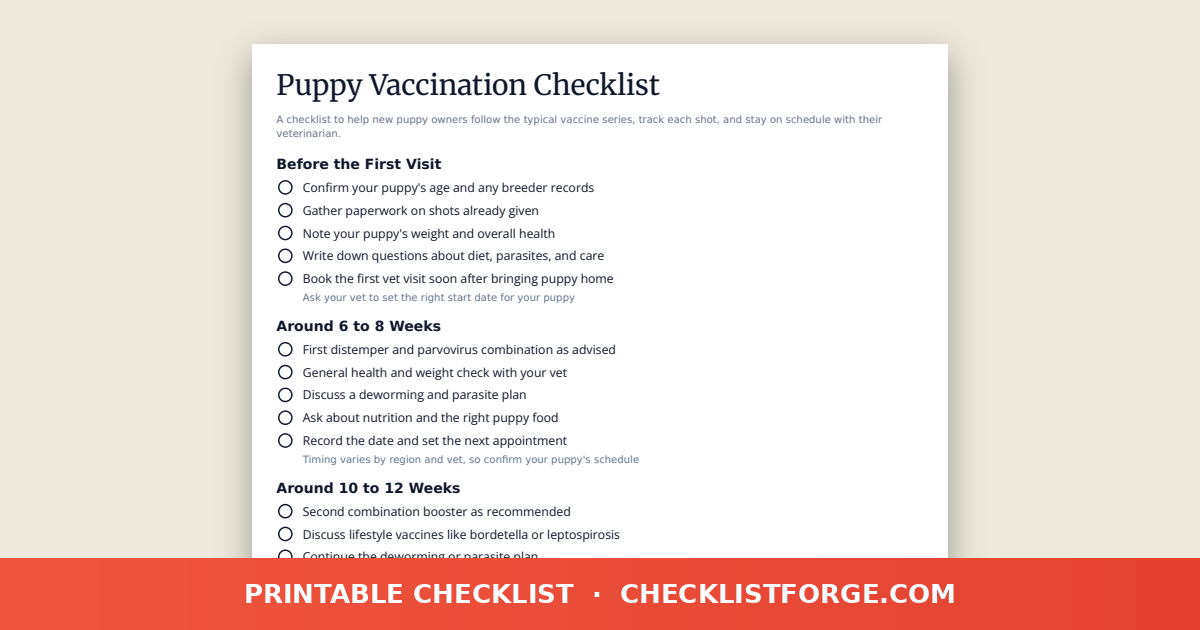
- Schedule a wellness exam within the first few days home.
- Bring any breeder or shelter records and a stool sample if asked.
- Ask about the puppy vaccination schedule and timing.
- Discuss deworming and flea and tick prevention.
- Confirm the right food and feeding amounts for your puppy's age.
- Ask when to plan spay or neuter and microchipping.
First-week routine
- Feed small, frequent meals at consistent times.
- Offer frequent potty breaks and reward success.
- Balance short play and handling with plenty of naps.
- Introduce the crate and alone-time in tiny, positive steps.
- Keep introductions to people and pets calm and gradual.
- Start gentle name recognition and basic cues.
Health and safety basics
- Watch appetite, energy, and stool, and note any concerns.
- Keep your puppy warm, hydrated, and rested.
- Limit exposure to unknown dogs until vaccinations are underway.
- Handle paws, ears, and mouth gently to build tolerance for grooming.
- Save your vet and nearest emergency clinic numbers.
- Important: This is general information, not veterinary advice. Always consult a veterinarian about your puppy's vaccinations, diet, and health.
0 / 36 done