Supplies to have ready
- Stock the food your dog already eats to avoid stomach upset.
- Get sturdy food and water bowls.
- Buy a collar with an ID tag, plus a leash and harness.
- Provide a comfortable bed and a crate or quiet safe space.
- Choose a few durable toys and chews.
- Keep cleanup supplies and enzyme cleaner on hand.
Preparing your home
- Dog-proof rooms by securing trash, cords, and hazards.
- Set up a calm, defined space where your dog can decompress.
- Check that fences, gates, and doors are secure with no gaps.
- Remove or store anything you do not want chewed early on.
- Decide house rules and share them with everyone at home.
- Plan to be home for the first days to ease the transition.
First vet visit
- Schedule a wellness exam soon after bringing your dog home.
- Bring any records and a stool sample if requested.
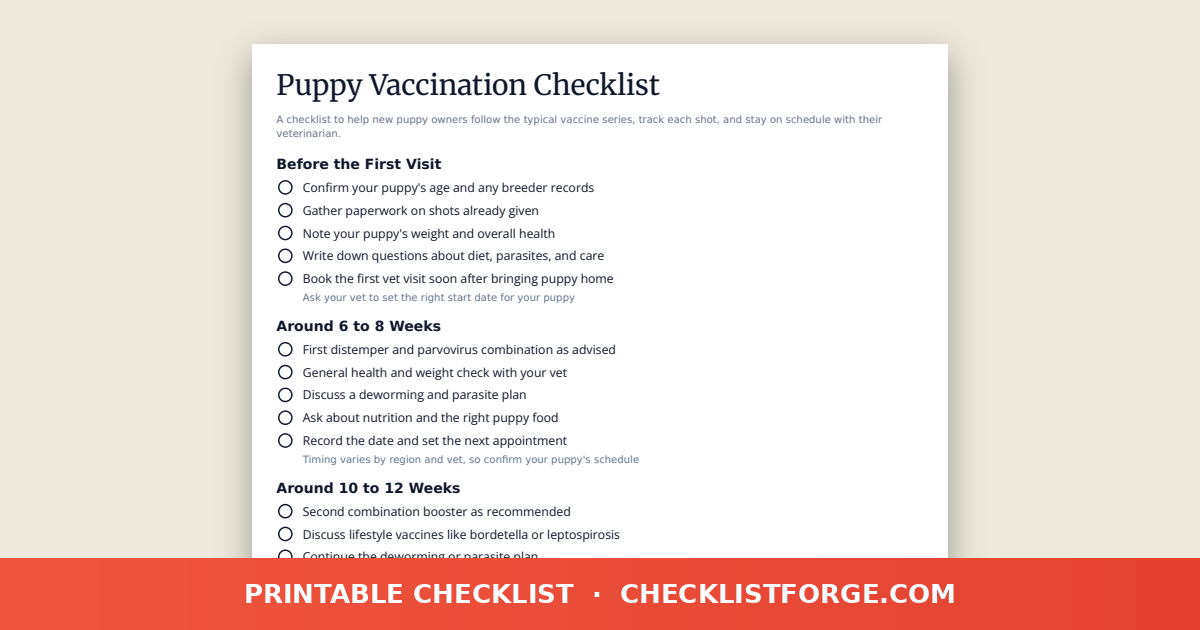
- Confirm vaccination status and any boosters needed.
- Discuss flea, tick, and worm prevention.
- Ask about the right food and amounts for your dog's size and age.
- Update microchip details and ask about spay or neuter if not done.
Settling in calmly
- Keep the homecoming low-key and the dog leashed at first.
- Introduce one room before opening up the whole house.
- Limit visitors and loud activity for the first days.Give your dog time and space to decompress.
- Let your dog approach you rather than crowding them.
- Provide a quiet retreat your dog can return to.
- Watch for stress signals and give space when needed.
Building a routine
- Set consistent feeding times right away.
- Establish a regular potty and walk schedule.
- Add daily exercise suited to your dog's energy.
- Reinforce basic cues gently and positively.
- Keep rest, play, and downtime predictable.
- Introduce alone-time gradually to prevent anxiety.
Introductions and safety
- Introduce existing pets slowly and under supervision.
- Supervise all interactions with children and teach gentle handling.
- Keep ID and a recent photo in case your dog gets out.
- Avoid off-leash areas until you know your dog's recall.
- Save your vet and nearest emergency clinic numbers.
- Important: This is general information, not veterinary advice. Always consult a veterinarian about your dog's vaccinations, diet, and health.
0 / 36 done