Kitten Vaccination Checklist

A checklist to help new kitten owners follow the typical vaccine series, track each shot, and stay on schedule with their veterinarian.

Published July 12, 2026

Download PDF

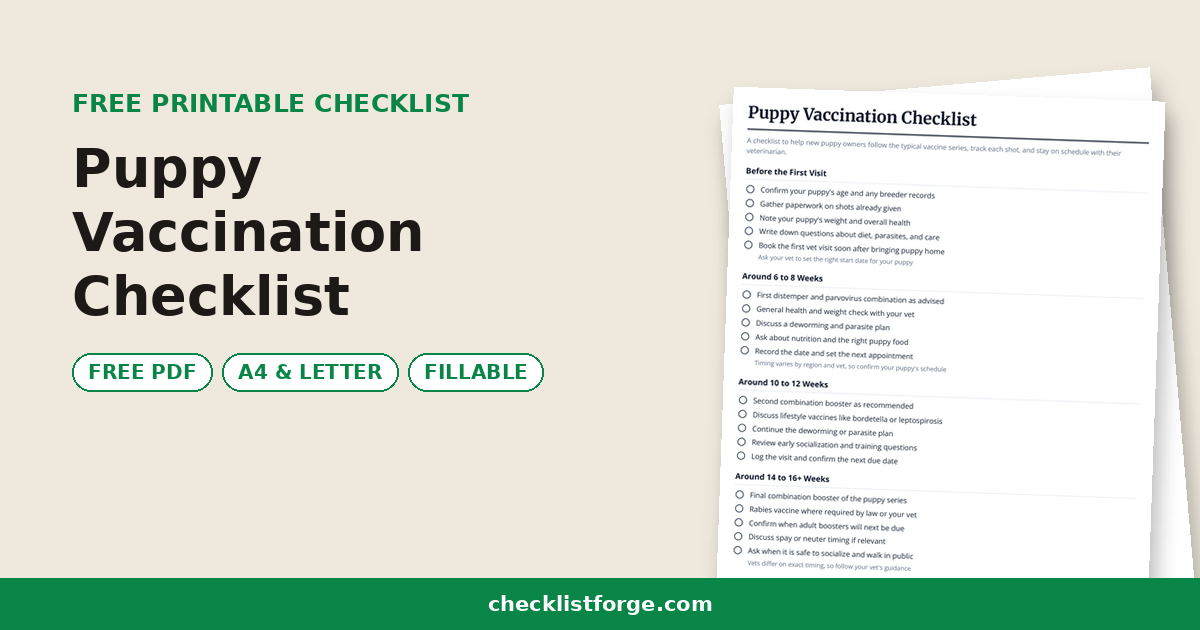
Before the First Visit

  • Confirm your kitten's age and any shelter records
  • Gather paperwork on shots already given
  • Note your kitten's weight and overall health
  • Write down questions about diet, parasites, and litter habits
  • Book the first vet visit soon after bringing kitten home
    Ask your vet to set the right start date for your kitten

Around 6 to 8 Weeks

  • First combination vaccine for feline viruses as advised
  • General health and weight check with your vet
  • Discuss a deworming and parasite plan
  • Ask about a feline leukemia test and prevention
  • Record the date and set the next appointment
    Timing varies by region and vet, so confirm your kitten's schedule

Around 10 to 12 Weeks

  • Second combination booster as recommended
  • Feline leukemia vaccine if outdoor access is likely
  • Continue the deworming or parasite plan
  • Review socialization, handling, and litter training
  • Log the visit and confirm the next due date

Around 14 to 16+ Weeks

  • Final combination booster of the kitten series
  • Rabies vaccine where required by law or your vet
  • Confirm when adult boosters will next be due
  • Discuss spay or neuter timing if relevant
  • Ask when outdoor access is safe if planned
    Vets differ on exact timing, so follow your vet's guidance

After Each Shot

  • Watch for mild soreness, tiredness, or low appetite
  • Note any swelling, vomiting, or distress to report
  • Give your kitten a calm, quiet place to rest
  • Update the record and set the next reminder
  • Keep a copy ready for boarding or travel
    Contact your vet promptly if you see a strong reaction

Records & Next Steps

  • Keep a running log of each vaccine and date
  • Save batch numbers and the clinic that gave each shot
  • Register and confirm your kitten's microchip details
  • Plan the first adult booster visit
  • Store a digital backup of the full kitten record

Important

  • This checklist is general information for owners, not veterinary advice; kitten vaccine schedules vary by region and vet, so always consult a licensed veterinarian
    For any reaction or emergency, contact your vet or an emergency animal hospital immediately

0 / 31 done

Stay on schedule with your veterinarian during a kitten's first months by using this kitten vaccination checklist to follow the typical series of shots and track every visit week by week. It outlines the usual stages from around six weeks through sixteen weeks and beyond.

Kittens are vaccinated in a series because the immunity passed from their mother fades over the first weeks of life. Spacing the shots over several visits helps build lasting protection against serious diseases like panleukopenia and respiratory infections.

The exact timing, number of doses, and which vaccines are given vary by region, lifestyle, and your vet's protocol, so the weeks below are a typical overview rather than a fixed schedule. Always follow your vet's plan.

Made for new kitten owners, this checklist is printable and downloadable as a PDF. Fill in the dates after each appointment and bring it along to track your kitten's progress.

FAQ

When do kitten vaccinations usually start?

Kitten shots often begin around six to eight weeks of age and continue in a series every few weeks. The exact start depends on your kitten's age and health, so confirm timing with your veterinarian.

How many rounds of shots does a kitten need?

Most kittens receive several rounds spaced a few weeks apart, typically finishing around sixteen weeks or later. The number of doses varies by vaccine and protocol, so follow your vet's plan.

Do indoor kittens need vaccines too?

Often yes. Some vaccines are recommended even for indoor cats, while others depend on outdoor access and exposure. Your veterinarian will advise which vaccines your kitten needs.

What if we miss a kitten vaccine appointment?

Contact your veterinarian as soon as possible. They will advise whether to continue where you left off or repeat part of the series so your kitten stays protected.

Built from public guidance and kept up to date — how we write our checklists. Spotted a mistake? Tell us.