Equipment Inspection Checklist

A general checklist for inspecting equipment before use.

Published July 4, 2026

General condition

  • Inspect the body and frame for cracks, dents or corrosion.
  • Check fasteners, bolts and mounts are tight and secure.
  • Verify the data plate and rating labels are present and legible.
  • Confirm no missing or damaged components or panels.
  • Check moving parts for wear, play or misalignment.
  • Verify the equipment is clean and free of debris buildup.

Safety devices

  • Confirm guards and shields are fitted and not bypassed.
    Never operate equipment with a missing guard or defeated safety device.
  • Check emergency stop functions and resets correctly.
  • Verify interlocks and safety switches operate as intended.
  • Confirm warning labels and safety signage are present and legible.
  • Check lockout/tagout points are accessible and functional.
  • Verify any required guarding sensors are clean and working.

Function and controls

  • Confirm controls, switches and buttons operate smoothly.
  • Check the equipment starts, runs and stops normally.
  • Verify gauges, indicators and displays read correctly.
  • Listen for unusual noise, vibration or grinding in operation.
  • Confirm speed, pressure or output stays within rated limits.
  • Check that any safety functions activate as designed.

Fluids and leaks

  • Check fluid levels including oil, coolant and hydraulic fluid.
  • Inspect for leaks, drips or stains under and around the equipment.
  • Verify hoses, lines and fittings are sound and not chafed.
  • Confirm seals and gaskets show no weeping or damage.
  • Check lubrication points are greased per the schedule.
  • Verify filters are clean or replaced as required.

Electrical and power

  • Inspect cords, plugs and cables for damage or fraying.
  • Confirm grounding and GFCI protection are in place where required.
  • Check batteries are charged, secured and free of corrosion.
  • Verify connections are tight and free of overheating signs.
  • Confirm guards are in place over electrical components.
  • Check that the equipment isolates and de-energizes correctly.

Records and follow-up

  • Confirm the equipment has a current inspection and service record.
  • Verify the last maintenance was completed on schedule.
  • Check certifications or calibration are in date where required.
  • Record any defect with severity and a recommended action.
  • Tag out and report any equipment that fails inspection.
  • Sign, date and file the completed inspection record.

0 / 36 done
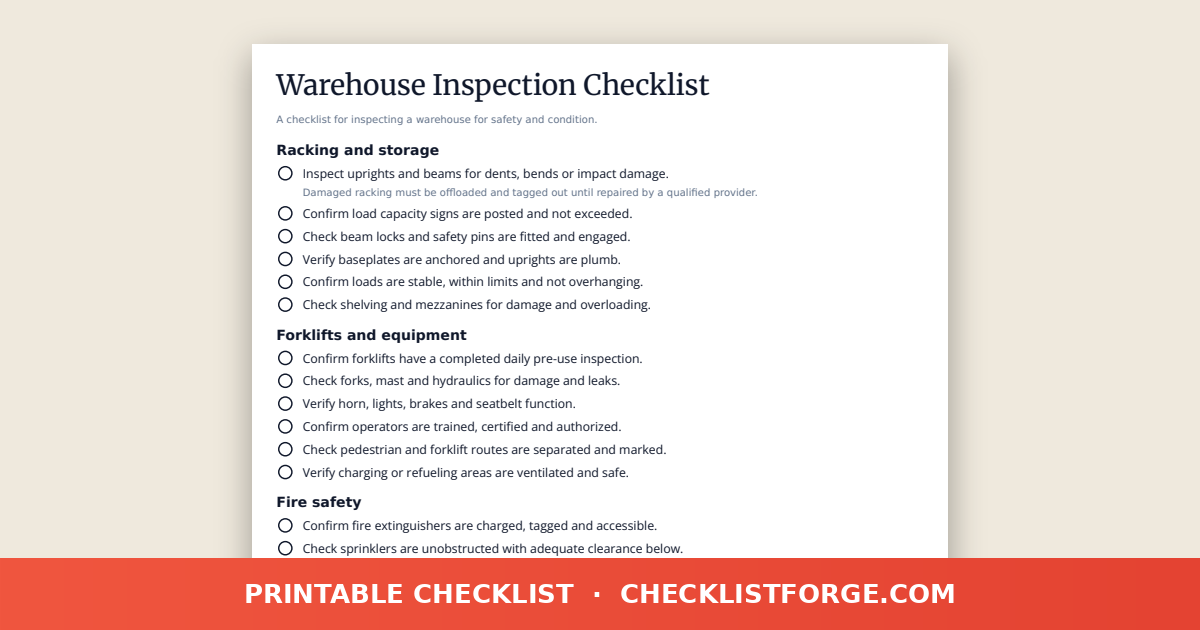
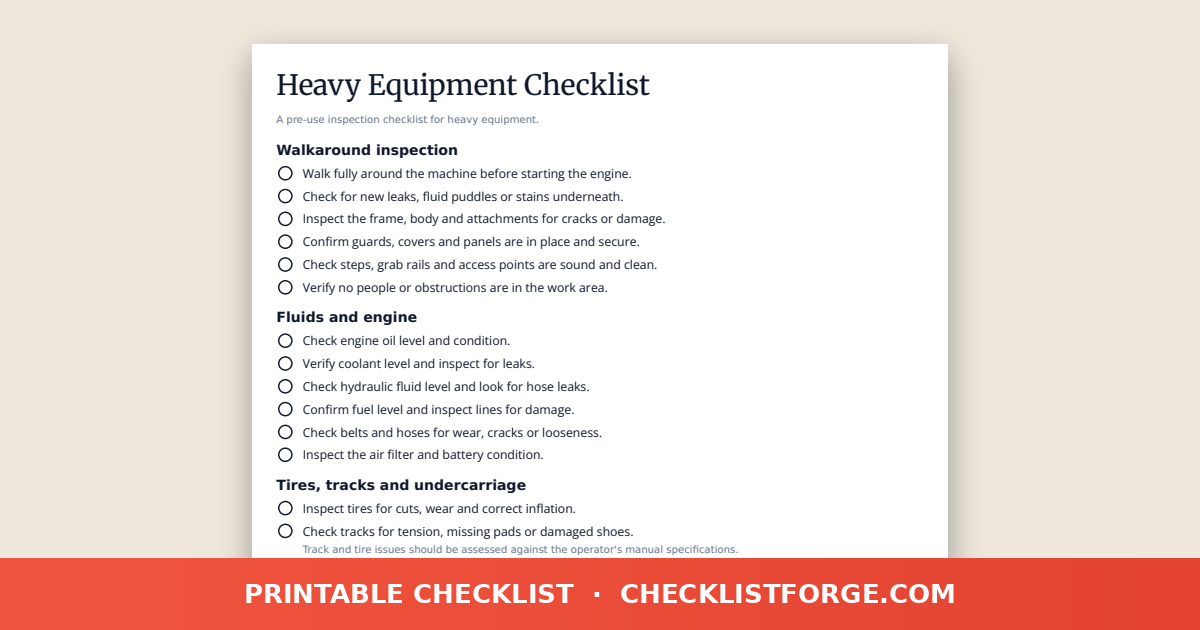
An equipment inspection checklist is a structured list operators use to confirm a piece of equipment is safe and fit for use before it is operated. It covers general condition, guards and safety devices, function and controls, fluids and leaks, and inspection records, with a clear pass or fail standard for each item.

Most equipment failures give warning signs. A worn guard, a slow control or a small leak signals a problem that is cheap to fix now and dangerous to ignore, which is why a quick documented check before use pays off.

Use this general checklist for tools, machines and powered equipment across maintenance, production and field work. Adapt the items to your specific equipment, mark each pass or fail, and tag out anything unsafe until it is repaired.

Print the checklist for a clipboard or logbook, or download the PDF to complete on a tablet and store with your maintenance records. Pre-use checks supplement, and do not replace, the manufacturer's manual, OSHA requirements and inspection by a qualified or competent person.

FAQ

What is an equipment inspection checklist?

It's a standardized list used to verify equipment is safe and fit for use before operation — covering condition, safety devices, function, fluids and records. Each item is marked pass or fail so defects are caught early.

How often should equipment be inspected?

Perform a pre-use check before each shift or use, plus scheduled maintenance inspections at the intervals set by the manufacturer. Inspect again after any incident, repair or unusual operation.

Who should inspect equipment?

The trained operator handles routine pre-use checks, while a qualified or competent person handles detailed maintenance inspections. Always follow the manufacturer's manual and your site's procedures.

What should I do if equipment fails inspection?

Tag the equipment out of service, isolate it from use, and report the defect for repair by a qualified person. Do not operate equipment with a missing guard, defeated safety device or known fault.

Is this available as a printable PDF?

Yes. Print the equipment inspection checklist for your logbook, or download the PDF to complete on a tablet and store with your maintenance records.