Training foundations
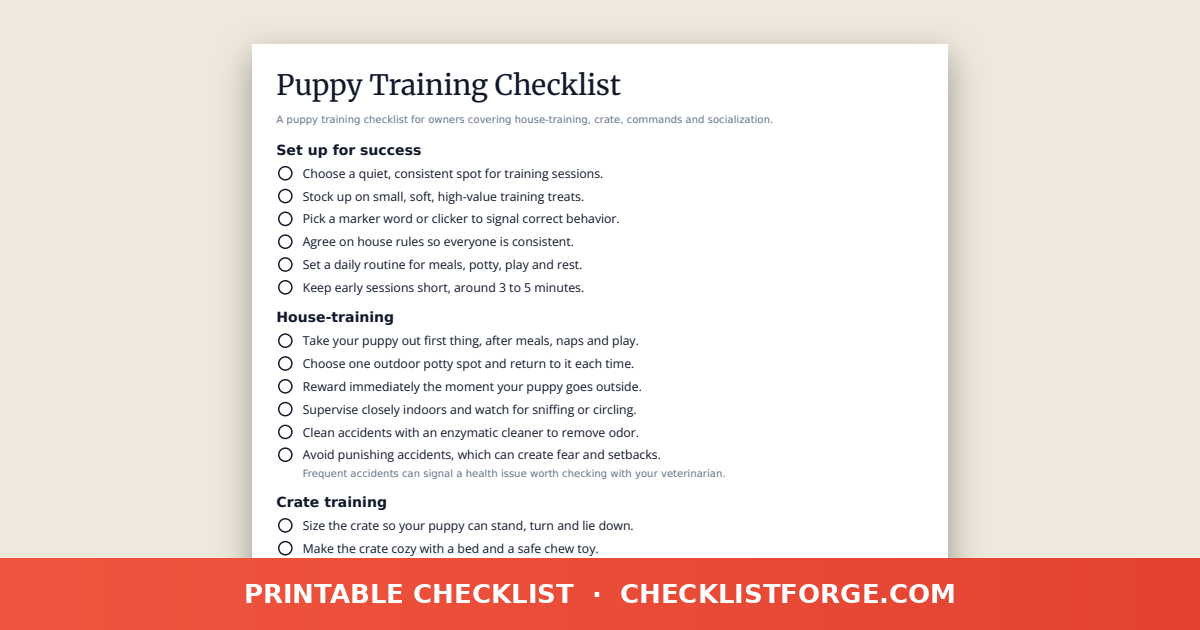
- Choose reward-based methods that reinforce wanted behavior.
- Pick a marker word or clicker your dog learns to trust.
- Use high-value treats your dog finds genuinely motivating.
- Agree on cue words and rules so the whole household is consistent.
- Keep sessions short, upbeat and end on a success.
- Train in low-distraction spots before adding difficulty.
Core commands
- Reinforce name attention so your dog checks in with you.
- Build a solid sit and reward consistently.
- Teach a reliable recall using a happy tone and great rewards.
- Practice down and a duration stay with gradual distance.
- Train leave it and drop it for safety around objects.
- Proof commands by practicing in new places and around distractions.
Leash manners
- Fit a comfortable collar or harness that does not chafe.
- Reward your dog for walking near you with a loose leash.
- Stop or change direction when the leash tightens.
- Mark and reward check-ins and eye contact on walks.
- Practice polite passing of people, dogs and distractions.
- Keep early walks short and gradually increase the challenge.
Behavior and manners
- Identify triggers for jumping, barking or chewing.
- Manage the environment to prevent rehearsing unwanted habits.
- Reward an alternative behavior, like four paws down for greetings.
- Redirect chewing to appropriate toys and chews.
- Teach settle and place for calm time in the home.
- Avoid harsh corrections that can increase fear or reactivity.For aggression, fear or persistent issues, consult a professional trainer or behaviorist.
Consistency and routine
- Use the same cue word for each behavior across the household.
- Reward good choices throughout the day, not only in sessions.
- Keep a steady routine for meals, walks, training and rest.
- Provide daily physical exercise and mental enrichment.
- Track progress so you know what to practice next.
- Phase out food rewards gradually as skills become reliable.
Health and well-being
- Ensure your dog gets enough sleep and downtime to learn well.
- Watch for signs of stress and give breaks when needed.
- Provide enrichment like sniff walks, puzzle feeders and chews.
- Note sudden behavior changes that could signal discomfort.
- Keep up routine veterinary care and parasite prevention.
- Important: This is general information, not professional advice. Consult a professional trainer for behavior problems and your veterinarian if training struggles may be linked to pain or illness.
0 / 36 done