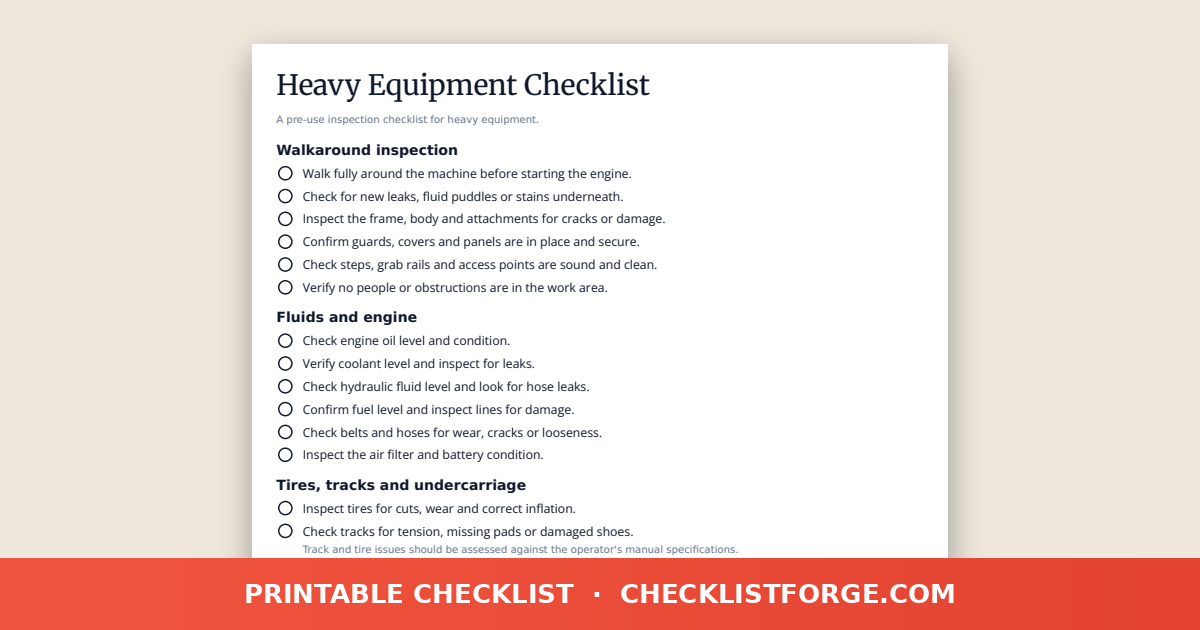
Building Inspection Checklist

A checklist for inspecting a building's overall condition.

Published July 3, 2026

Structure and foundation

  • Inspect the foundation for cracks, movement or water intrusion.
  • Check walls and ceilings for cracks, bowing or staining.
  • Verify load-bearing elements show no sagging or deflection.
    Suspected structural movement requires assessment by a qualified engineer.
  • Inspect floors for unevenness, soft spots or excessive deflection.
  • Check for signs of damp, rot or termite or pest damage.
  • Confirm expansion joints and supports are intact.

Roof and exterior

  • Inspect the roof covering for missing, cracked or lifted materials.
  • Check flashing, gutters and downpipes for damage and blockages.
  • Verify drainage directs water away from the building.
  • Inspect exterior walls, cladding and render for cracks or deterioration.
  • Check windows and doors seal properly and operate freely.
  • Inspect parking, paths and steps for trip hazards and damage.

Electrical systems

  • Check the main panel for proper labeling, no scorching and a clear front.
  • Verify breakers and GFCI/RCD protection operate correctly.
  • Inspect outlets, switches and fixtures for damage or overheating.
  • Confirm no exposed, frayed or temporary wiring is in use.
  • Check emergency and exit lighting functions on test.
  • Verify any electrical work appears compliant and certified.

Plumbing and HVAC

  • Check for leaks, drips and water staining at fixtures and pipes.
  • Verify hot and cold water flow and adequate drainage.
  • Inspect the water heater for leaks, corrosion and a safety valve.
  • Confirm HVAC units run, with clean filters and clear vents.
  • Check for unusual noise, odor or poor airflow in the system.
  • Verify backflow prevention and shutoff valves are accessible.

Fire and life safety

  • Confirm smoke and fire detectors are present and test correctly.
  • Check fire extinguishers are charged, tagged and accessible.
  • Verify fire exits are unobstructed and doors open freely.
  • Confirm exit and emergency signage is visible and lit.
  • Check sprinkler and alarm systems show current service records.
  • Verify fire-rated doors and barriers are intact and self-closing.

Interior and documentation

  • Inspect interior finishes for damage, mold or water staining.
  • Check stairs, handrails and balustrades are secure and code-height.
  • Verify accessibility features and clearances are maintained.
  • Confirm ventilation is adequate in bathrooms and kitchens.
  • Record each defect with severity, location and recommended action.
  • Sign, date and file the completed inspection report.

0 / 36 done
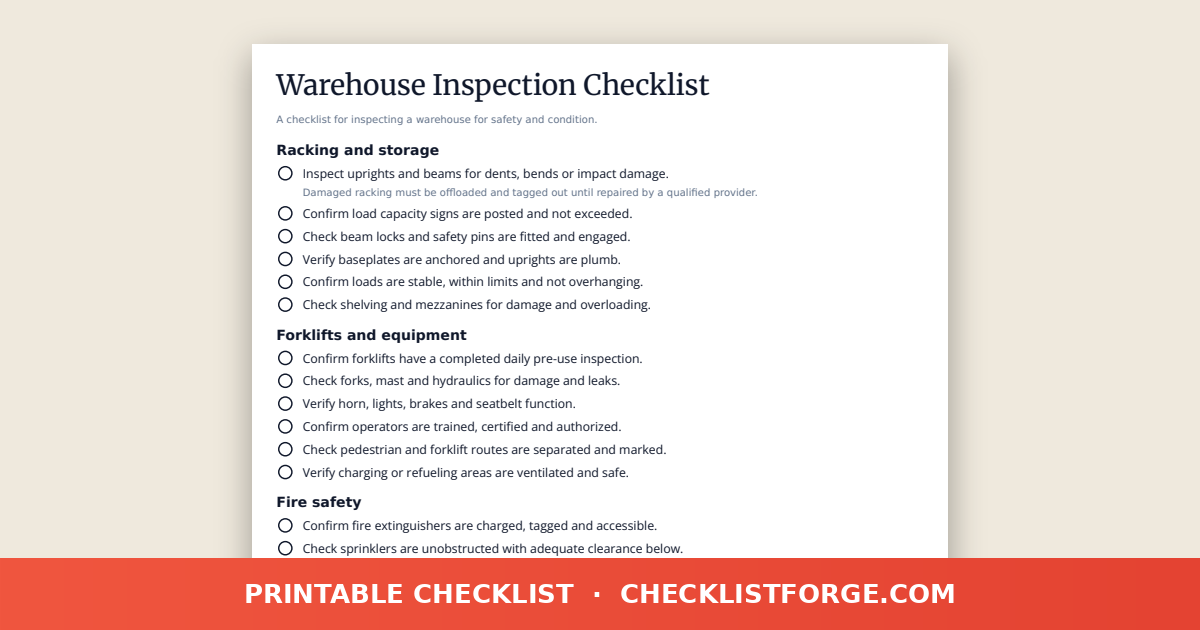
A building inspection checklist is a structured list used to assess a building's condition and safety, covering the structure, roof, exterior, interior and the mechanical, electrical and plumbing systems. Each item is checked against a clear pass or fail standard so defects can be documented and prioritized for repair.

Buildings deteriorate quietly. A hairline crack, a slow roof leak or a tripping breaker can sit unnoticed until it becomes a costly structural or safety problem, which is why a methodical walkthrough matters.

Use this checklist whether you are a property inspector, facilities manager or owner evaluating a building before purchase, lease renewal or routine maintenance. Note each finding, photograph defects, and flag anything that needs a licensed specialist.

Print the checklist to carry through the building room by room, or download the PDF to complete on a tablet and attach to your inspection report. This general inspection supplements, and does not replace, a licensed inspector, local building codes and engineering assessments where structural concerns are found.

FAQ

What is a building inspection checklist?

It's a standardized list used to evaluate a building's condition — structure, roof, exterior, interior and MEP systems — against pass or fail criteria. It helps inspectors and owners document defects and prioritize repairs.

How often should a building be inspected?

Inspect at least annually for routine condition, and again before a sale, lease change or after severe weather or any reported defect. High-occupancy or older buildings may warrant more frequent checks.

Does this replace a licensed inspector's report?

No. This checklist supports a thorough walkthrough but does not replace a licensed building inspector or engineer, especially where structural, electrical or code-compliance questions arise.

What should I do about a defect I can't assess?

Document and photograph it, note that it needs specialist review, and refer it to the appropriate licensed trade or engineer. Do not occupy or use any area with a suspected serious structural or safety defect.

Is this available as a printable PDF?

Yes. Print the building inspection checklist to carry through each area, or download the PDF to complete on a tablet and attach to your inspection report.