Self-Care Checklist

A holistic checklist for caring for your physical, emotional, social, and practical wellbeing.

Published July 2, 2026

Download PDF

Physical Self-Care

  • Drink water regularly throughout the day
  • Eat balanced meals and avoid skipping food when busy
    Steady meals support your mood and energy, not just your body.
  • Move your body in a way you enjoy for at least a few minutes
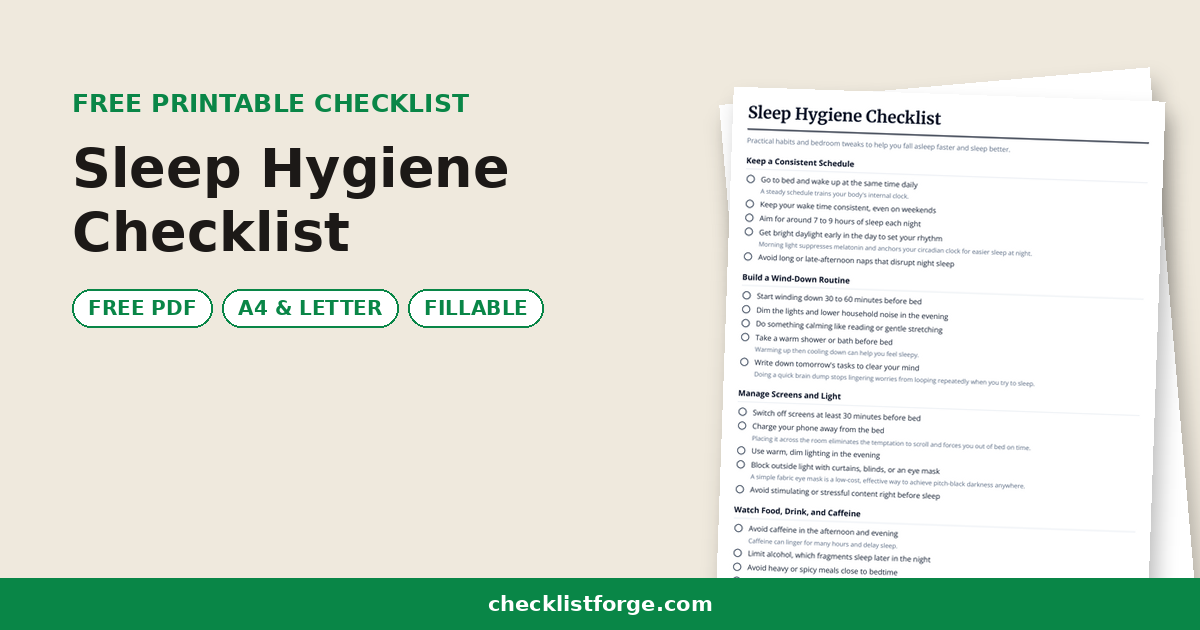
  • Aim for 7 to 9 hours of quality sleep
  • Step outside for fresh air and natural light
    Morning sunlight helps regulate your circadian rhythm, improving nighttime sleep and daytime focus.
  • Rest when you are tired instead of pushing through

Emotional Self-Care

  • Name how you are feeling without judging yourself
  • Write in a journal or note what is on your mind
  • Allow yourself to cry, vent, or process difficult feelings
  • Practice self-compassion and speak to yourself kindly
    Talk to yourself as you would to a good friend.
  • Do something that genuinely makes you smile or laugh
  • Take a break from anything draining your emotional energy

Mental Self-Care

  • Take short breaks from screens and information overload
  • Spend a few minutes on mindfulness or slow breathing
    Even two minutes of box breathing can lower your heart rate and shift your body out of fight-or-flight.
  • Do something creative or learn something just for fun
  • Limit doomscrolling and curate your feeds
  • Break overwhelming tasks into smaller, manageable steps
    Write down just the very next physical action to overcome paralysis and reduce mental friction.
  • Give yourself permission to do nothing for a while

Social Self-Care

  • Reach out to a friend or family member you trust
  • Spend quality time with people who lift you up
  • Ask for help or support when you need it
    Letting others help is a form of self-care, not weakness.
  • Set gentle boundaries and say no when you are stretched
    A simple 'I don't have the capacity for this right now' protects your energy without over-explaining.
  • Take a break from people or groups that drain you
  • Plan something to look forward to with someone you like

Practical Self-Care

  • Tidy a small space to reduce visual stress
    Focus on a single surface, like a nightstand or desk, to lower visual clutter without exhaustion.
  • Handle one nagging task you have been avoiding
  • Review your finances or pay a bill so it stops looming
  • Plan meals or prep something to make the week easier
  • Book that appointment you have been putting off
  • Set up your space so tomorrow feels a little smoother

Check in With Yourself

  • Pause and ask what you actually need right now
  • Notice which area of self-care you have been neglecting
  • Pick one small, realistic act to do today
    Choose an action so small it feels effortless. Momentum builds faster from tiny, repeated wins.
  • Celebrate the self-care you already managed, however small
  • Remember that consistent small acts matter more than perfect ones

0 / 35 done
Nurture your physical, emotional, social, and practical wellbeing with this self-care checklist of small, intentional daily actions. It turns the broad idea of self-care into concrete things you can actually do, from drinking enough water to reaching out to a friend.

Self-care is not selfish or expensive. It is the regular maintenance that keeps you steady, rested, and able to cope with daily demands. The best self-care is often the basic, unglamorous stuff done consistently.

Use this checklist as a menu, not a to-do list to perfect. On a busy day, one or two items count. On a slower day, you might do more. Choose what fits your needs right now.

Keep it handy: print the PDF and keep it on your fridge or desk, or download it to your phone so you can check in with yourself and tend to each area of your wellbeing.

FAQ

What is self-care, really?

Self-care is the everyday things you do to look after your physical, emotional, and mental wellbeing. It includes basics like sleep, food, movement, rest, and connection, as well as setting boundaries and asking for help when you need it.

How often should I practice self-care?

A little every day works better than occasional big gestures. Aim to cover the basics daily, such as water, food, movement, and rest, and add deeper self-care, like time with friends or a hobby, across each week.

I have no time or money for self-care. What can I do?

Much of the most effective self-care is free and quick: a glass of water, a short walk, a few deep breaths, stepping outside, or a kind message to a friend. Start with one small, realistic act rather than waiting for a perfect moment.

What are the main areas of self-care?

A helpful way to think about it is across several areas: physical, emotional, social, mental, and practical. Checking in with each area helps you notice what you have been neglecting and where a little attention would help most.

What is a basic daily self-care routine for busy adults?

A realistic daily routine focuses on foundational needs rather than complex rituals. Start by drinking a full glass of water upon waking, getting a few minutes of natural daylight, and eating regular meals. Build in micro-pauses between tasks to breathe and stretch. End the day by stepping away from screens early enough to rest properly. Consistency with two or three basics is far more effective than trying to do everything.

How can I balance emotional and physical self-care when overwhelmed?

Physical and emotional wellbeing reinforce each other. When overwhelmed, start with simple physical comfort, like washing your face, changing into comfortable clothing, or drinking water. Regulating your physical state helps calm your nervous system. From there, acknowledge your emotions honestly without judgment. You do not need to solve every feeling immediately; simply recognizing stress and meeting your basic bodily needs creates space for emotional recovery.

Built from public guidance and kept up to date — how we write our checklists. Spotted a mistake? Tell us.