Oral Hygiene Checklist

A daily checklist of brushing, flossing and mouth-care habits that keep your teeth and gums healthy.

Published July 1, 2026

Brush Twice a Day

  • Brush in the morning and again before bed
  • Brush for a full two minutes each time
    A timer or an electric brush's built-in timer makes this easy.
  • Use a soft-bristled toothbrush to protect gums and enamel
  • Hold the brush at a 45-degree angle to the gumline
  • Use gentle, short strokes rather than hard scrubbing
  • Cover all surfaces: outer, inner and chewing sides
  • Brush behind the front teeth, top and bottom

Floss and Clean Between Teeth

  • Floss once a day, ideally before brushing at night
  • Use about 18 inches of floss, winding it around your fingers
  • Curve the floss into a C shape against each tooth
  • Use a clean section of floss for every gap
    Reusing the same spot just moves plaque around.
  • Try floss picks or interdental brushes if string floss is awkward
  • Be gentle near the gumline to avoid bleeding and damage

Use Fluoride and Mouth Care

  • Brush with a fluoride toothpaste to strengthen enamel
  • Spit out excess toothpaste but avoid rinsing heavily with water
    Leaving a little fluoride behind helps protect your teeth.
  • Clean your tongue with the brush or a tongue scraper
  • Use an alcohol-free mouthwash if you like, as an extra step not a replacement
  • Check toothpaste contains fluoride when buying it

Build Good Daily Habits

  • Wait about 30 minutes to brush after acidic food or drinks
    Acid softens enamel temporarily, so brushing too soon can wear it.
  • Drink water through the day to rinse away food and acid
  • Limit sugary snacks and sip-all-day sweet drinks
  • Avoid smoking and tobacco, which harm gums and teeth
  • Keep a spare brush and travel floss for trips
  • Replace your toothbrush every three to four months

Watch for Warning Signs

  • Note bleeding gums when brushing or flossing
  • Watch for persistent bad breath or a bad taste
  • Check for tooth sensitivity to hot, cold or sweet
  • Look for red, swollen or receding gums
  • Book a dental visit for any pain, loose teeth or sores that linger
    Catching problems early is usually simpler and cheaper to treat.
  • Important: this is general information, not dental advice
    See a dentist for cleanings, checkups and any persistent tooth or gum problem.

0 / 30 done
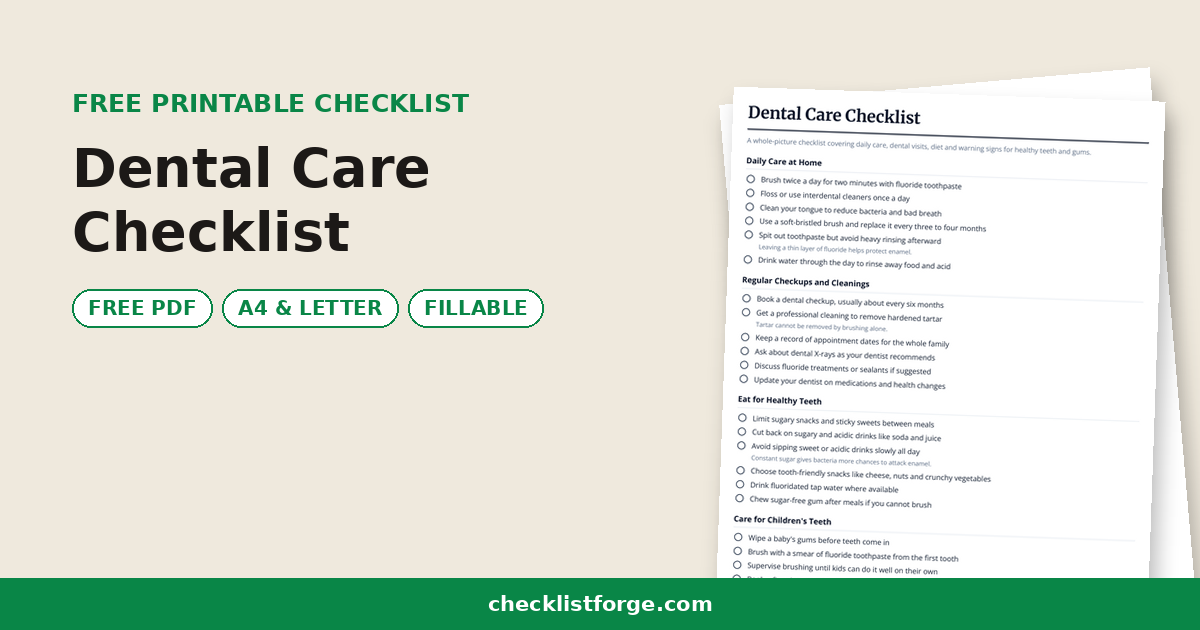
An oral hygiene checklist is a simple list of daily habits that keep your teeth and gums clean and healthy: brushing twice a day, flossing once, cleaning your tongue and using fluoride toothpaste. It turns good mouth care into a routine you can repeat without thinking.

Consistent oral hygiene removes the plaque that causes cavities, gum disease and bad breath. Technique and timing matter as much as how often you brush, so this checklist covers both.

The printable format is handy to tape inside a bathroom cabinet or keep with a child's routine chart. Save or print the PDF and tick off your habits morning and night.

Whether you are a beginner building a daily routine or helping a family stay consistent, this checklist keeps the basics on track without overcomplicating them.

FAQ

How often should I brush my teeth?

Brush twice a day for two minutes each time, ideally in the morning and before bed. Use a soft-bristled brush and fluoride toothpaste, and replace the brush every three to four months or when the bristles fray.

Do I really need to floss every day?

Yes. Flossing or using an interdental cleaner once a day removes plaque and food between teeth where a brush cannot reach. Skipping it leaves about a third of each tooth uncleaned, raising the risk of cavities and gum disease.

Should I rinse with water after brushing?

It is better to spit out excess toothpaste and avoid rinsing heavily with water right after brushing. Leaving a thin layer of fluoride on your teeth helps protect the enamel between brushings.

Can I print this oral hygiene checklist?

Yes. You can print the checklist or download it as a PDF, then tick off your brushing, flossing and mouth-care habits each morning and night to keep your daily routine on track.

Is this medical advice?

No. This is general information about everyday oral hygiene, not medical or dental advice. See a dentist for cleanings, checkups, or any tooth or gum problem that is painful, bleeding or does not go away.