Prepare Your Home
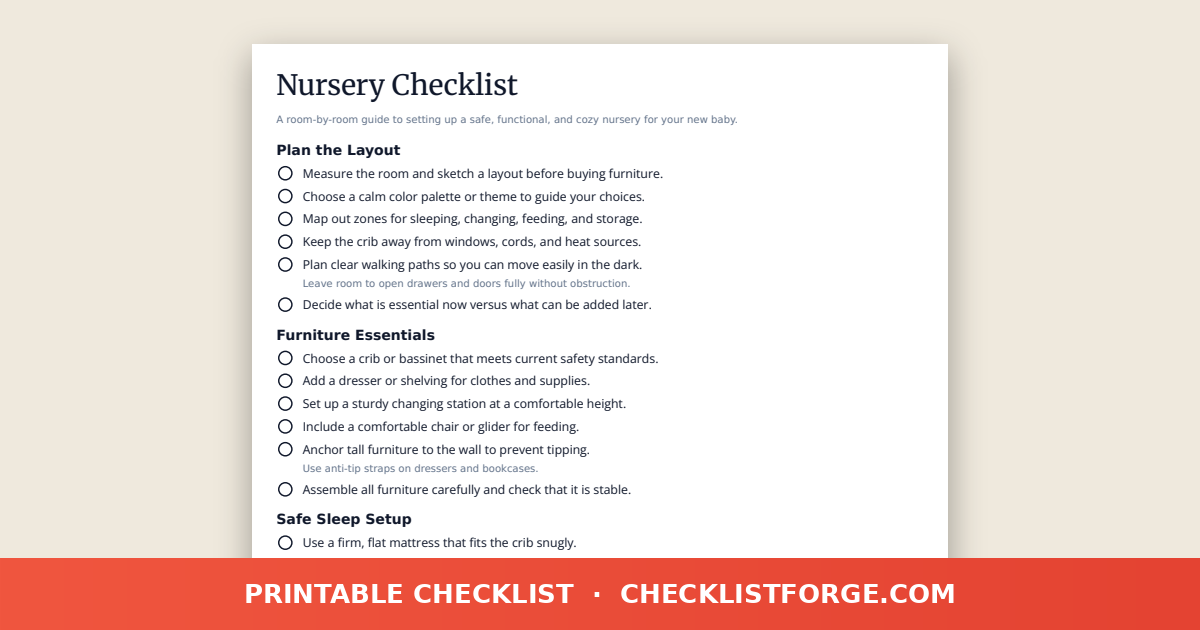
- Set up a safe sleep space with a firm, flat mattress and fitted sheet.
- Choose and prepare a diaper-changing area with supplies within reach.
- Wash baby clothes, blankets, and bedding in a gentle detergent.
- Babyproof basics like outlet covers, cabinet latches, and cord safety.
- Stock a small first-aid kit and a digital thermometer.Ask your pediatrician which items they recommend keeping on hand.
- Create a comfortable spot for feeding with good back support and a side table.
Baby Gear and Travel
- Install an infant car seat and have it inspected before the due date.
- Choose a stroller or carrier that fits your daily routine.
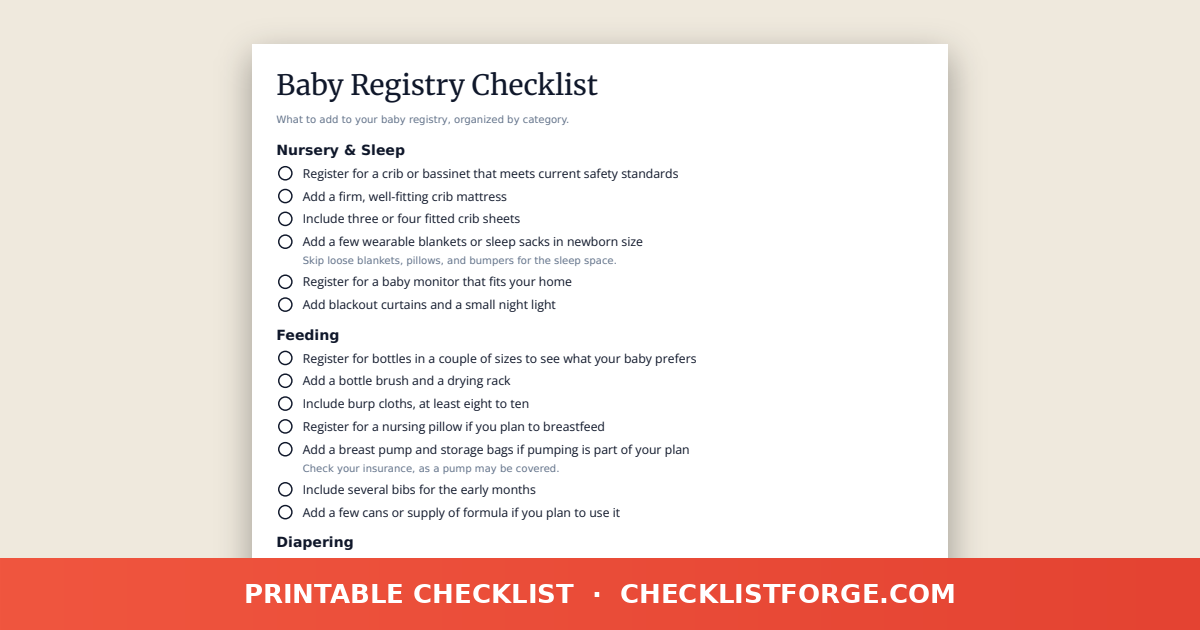
- Set up a crib, bassinet, or co-sleeper that meets current safety standards.
- Get a baby monitor if your sleep space is in another room.
- Prepare a diaper bag stocked with the basics for outings.
- Add a portable changing pad and a few spare outfits to your bag.
Feeding Supplies
- Decide on your feeding approach and gather the matching supplies.
- Stock bottles, nipples, and a bottle brush if you plan to bottle-feed.
- Set up a breast pump and storage bags if you plan to pump.
- Have burp cloths and bibs ready for spills and spit-up.
- Keep a comfortable feeding pillow nearby for support.
- Talk to your provider about feeding questions and concerns.A lactation consultant can help if breastfeeding feels difficult early on.
Clothing and Diapering
- Stock newborn and next-size bodysuits, sleepers, and socks.
- Keep a few packs of diapers in the smallest size and the next size up.
- Have plenty of wipes and a gentle diaper cream on hand.
- Add swaddles or sleep sacks suited to the season.
- Prepare hats, mittens, and weather-appropriate layers.
- Set up a small laundry routine for frequent outfit changes.
Health and Safety
- Choose a pediatrician and schedule the first newborn visit.
- Gather baby bath supplies, soft towels, and a gentle wash.
- Keep a nasal aspirator and infant nail file or clippers ready.
- Learn the basics of safe sleep and follow them every time.
- Save key phone numbers for your provider and nearest urgent care.Consider a basic infant CPR class before your due date.
- Review any health guidance from your provider for the first weeks.
Paperwork and Finances
- Confirm the process for the birth certificate and Social Security number.
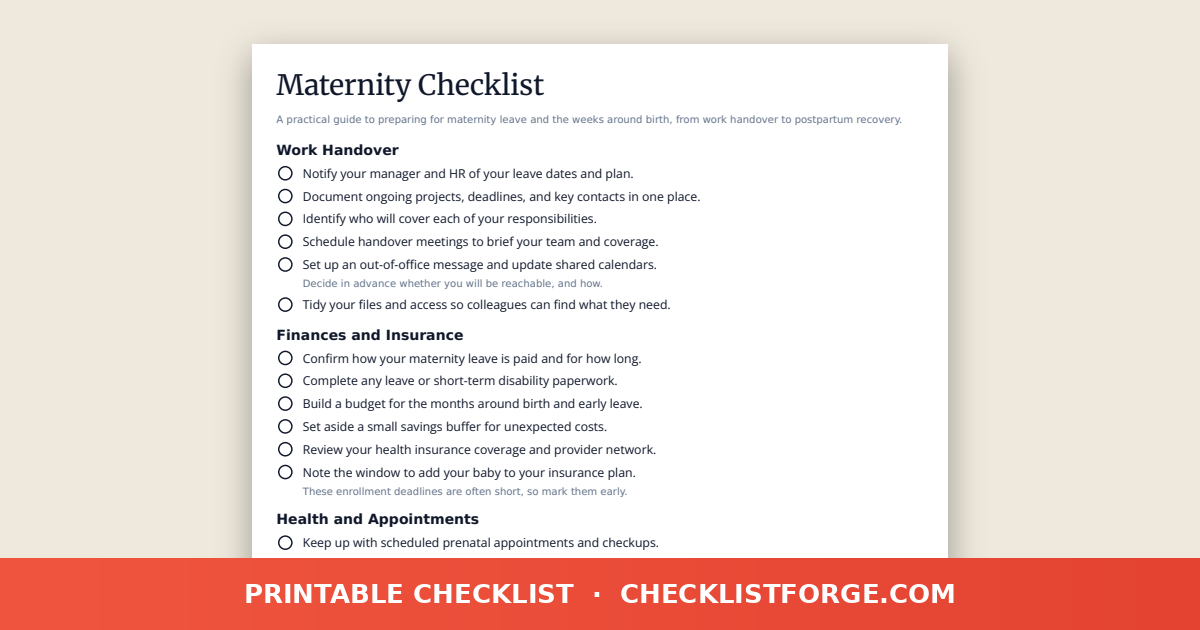
- Add your baby to your health insurance within the enrollment window.
- Review and arrange parental leave with your employer.
- Update beneficiaries and consider a basic will or guardianship plan.
- Set a simple budget for new baby-related expenses.
- Keep all important documents together in one labeled folder.
Line Up Support
- Identify who can help in the first weeks home.
- Prepare and freeze a few easy meals ahead of time.
- Set boundaries and a plan for early visitors.
- Save contacts for support lines, classes, or new-parent groups.
- Arrange backup transportation in case you need it.
- Plan small moments of rest and recovery for both parents.Accept offers of help with chores, meals, and errands.
0 / 42 done