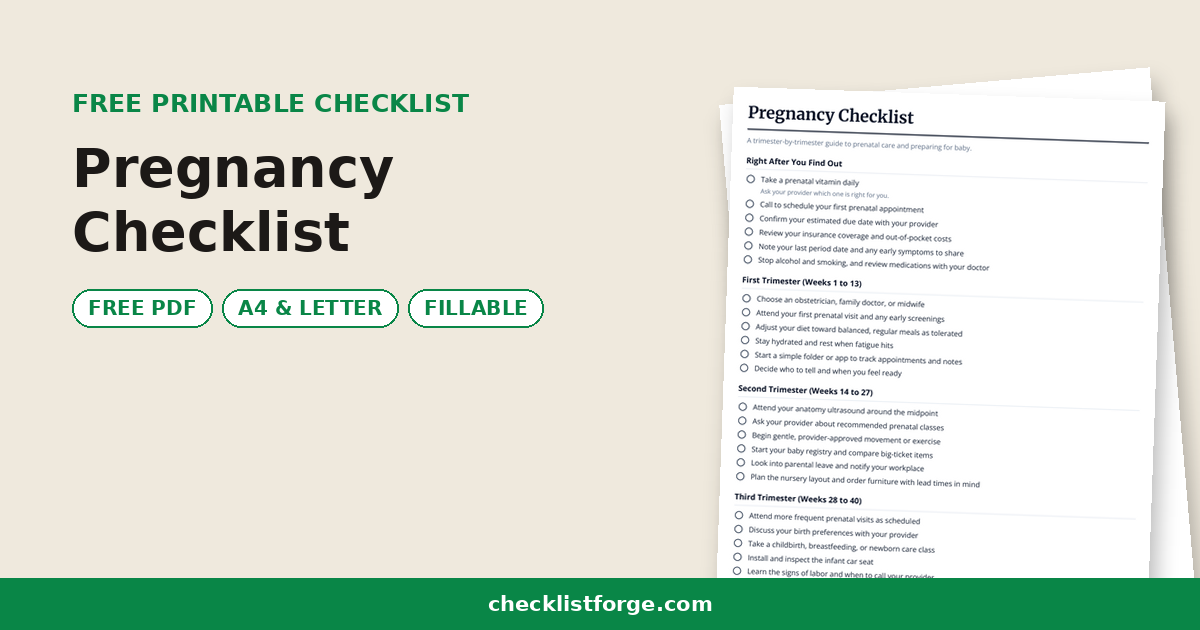
As soon as you find out
- Call to schedule your first prenatal appointment.
- Start a prenatal vitamin with folic acid as directed.
- Stop alcohol, smoking and recreational drugs.
- Review current medications and supplements with your provider.Do not stop prescribed medication without medical advice.
- Note the first day of your last period to help estimate your due date.
- Check your health insurance and maternity coverage.
First trimester (weeks 1 to 13)
- Attend your first prenatal visit and confirm your due date.
- Complete initial blood and urine tests as advised.
- Discuss optional first-trimester genetic screening.
- Ask about managing nausea, fatigue and food safety.
- Begin gentle, provider-approved exercise and good sleep habits.
- Decide who to tell and when you feel ready.
Second trimester (weeks 14 to 27)
- Attend regular checkups and track blood pressure and growth.
- Have the anatomy ultrasound around the midpoint.
- Complete glucose screening for gestational diabetes as scheduled.
- Ask about a Tdap vaccine and any others your provider recommends.
- Start researching childbirth and breastfeeding classes.
- Begin a baby budget and any registry planning.
Third trimester (weeks 28 to birth)
- Attend more frequent appointments as your provider directs.
- Discuss your birth preferences and pain relief options.
- Confirm your group B strep test near the end of pregnancy.
- Learn the signs of labor and when to call or go in.
- Pack your hospital or birth-center bag.
- Install and check the infant car seat before the due date.
Healthy lifestyle throughout
- Eat balanced meals and stay well hydrated.
- Stay active with provider-approved movement most days.
- Prioritize rest and consistent sleep.
- Practice food safety and avoid foods your provider flags.
- Manage stress with support, rest and gentle routines.
- Keep all prenatal appointments and follow-up tests.
Planning and preparation
- Choose your pediatrician and confirm they take your insurance.
- Set up the nursery basics and a safe sleep space.
- Arrange parental leave and care logistics with your employer.
- Line up postpartum support from family or friends.
- Prepare a feeding plan to discuss with your provider.
- Important: This is general information, not medical advice. Always follow the guidance of your OB-GYN or midwife, and contact them with any questions or concerns about your pregnancy.
0 / 36 done