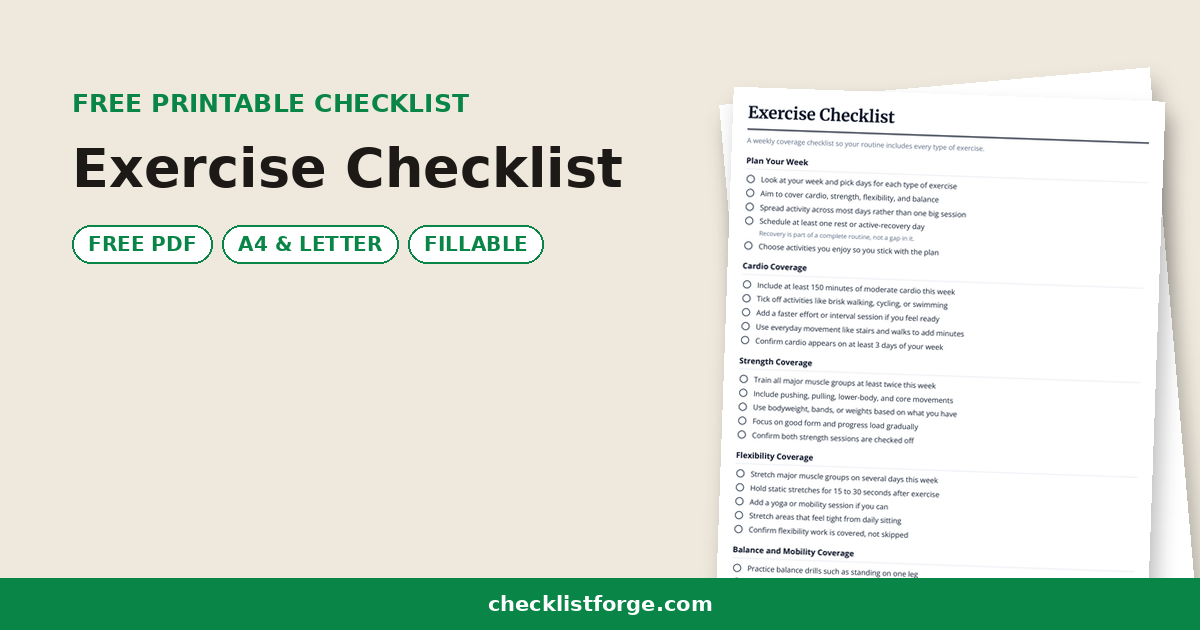
Set Your Goals
- Decide your main goal: general health, strength, endurance, or weight management
- Choose how many days per week you can realistically train
- Set one measurable target for the next 4 weeksFor example, walk 8,000 steps daily or do 10 push-ups in a row.
- Schedule your sessions in your calendar like appointments
- Plan how you will track progress over time
Cardio Pillar
- Include at least 150 minutes of moderate cardio across the week
- Pick activities you enjoy, such as walking, cycling, or swimming
- Mix steady sessions with the occasional faster effort as you improve
- Warm up for 5 minutes before raising the intensity
- Build up duration gradually rather than all at once
Strength Pillar
- Train all major muscle groups at least twice a week
- Include pushing, pulling, squatting, and core movements
- Start with bodyweight or light weights and focus on good form
- Progress gradually by adding reps, sets, or resistanceSmall, steady increases reduce injury risk and keep you improving.
- Rest a muscle group at least one day before training it again
Flexibility and Mobility Pillar
- Stretch major muscle groups a few times a week
- Do dynamic stretches before workouts and gentle stretches after
- Add mobility drills for hips, shoulders, and ankles
- Hold static stretches for 15 to 30 seconds without bouncing
- Consider yoga or a mobility routine on lighter days
Rest and Recovery
- Schedule at least 1 to 2 rest or active-recovery days each week
- Aim for 7 to 9 hours of quality sleep per night
- Listen to your body and ease off if you feel run down or sore
- Use light walking or stretching on recovery days
- Avoid training through sharp pain and seek advice if it persists
Nutrition and Hydration
- Eat balanced meals with protein, whole grains, and plenty of vegetables
- Include protein to support muscle repair and growth
- Stay hydrated before, during, and after workouts
- Have a light snack before training if you need energy
- Limit ultra-processed foods and sugary drinks most of the time
Track and Stay Consistent
- Log your workouts and how you felt afterward
- Review your week to confirm every pillar was covered
- Adjust your plan if any area is consistently being skipped
- Celebrate progress and small wins to stay motivated
- Important: This is general information, not medical advice. Consult your doctor before starting a new fitness program, especially with a health condition, injury, or pregnancy.
0 / 35 done